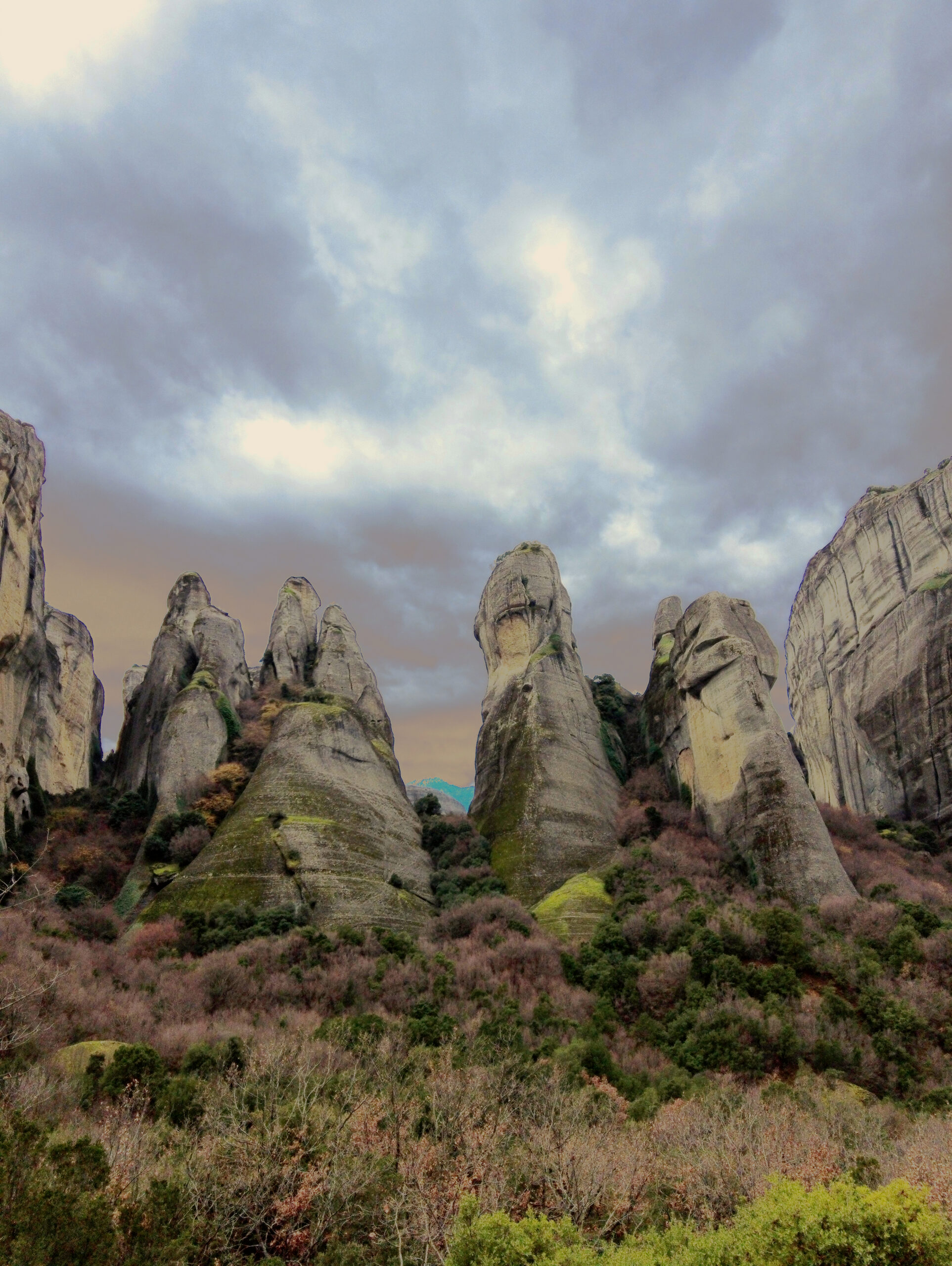
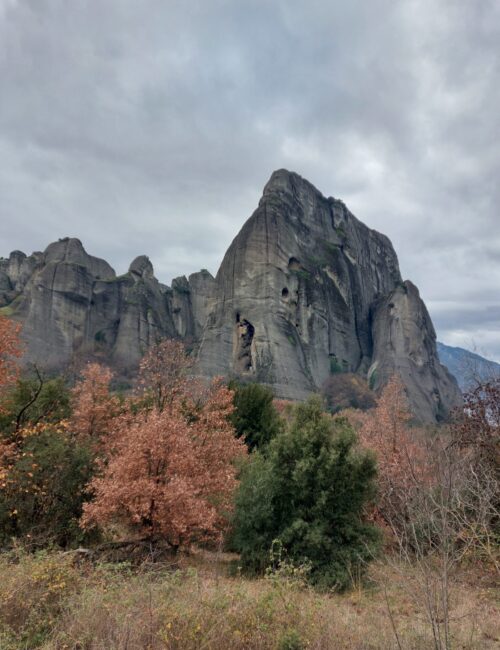
So dramatic are the massive sandstone rocks, which date back over 60 million years, that any newcomer feels like they have just entered an AI-generated world. What’s more astounding is that, centuries ago, monks built monasteries on top of these towering pillars—with zero machinery or machine intelligence but with sheer human skill and mastery of the elements.
It’s this rare combination of mankind’s ingenuity and nature’s wild design that makes one wonder: how did nature shape this, and how did humans even think to build something up here?
Yet, no sooner does the thought arise than the clouds of doubt are demystified by Mr. Vasilis Tsiantikos, the man leading the cycle tour, who is as much a storyteller as he is a passionate mountain biker.
It is the vision of him and his partner, Jenny, to offer travellers a unique way to experience this landscape—one that’s redefining tourism in this UNESCO World Heritage Site. As co-founders of Meteora e-bike, the first such company in this rather remote location, they say, “the slower you go up there, the more you absorb its magic.”
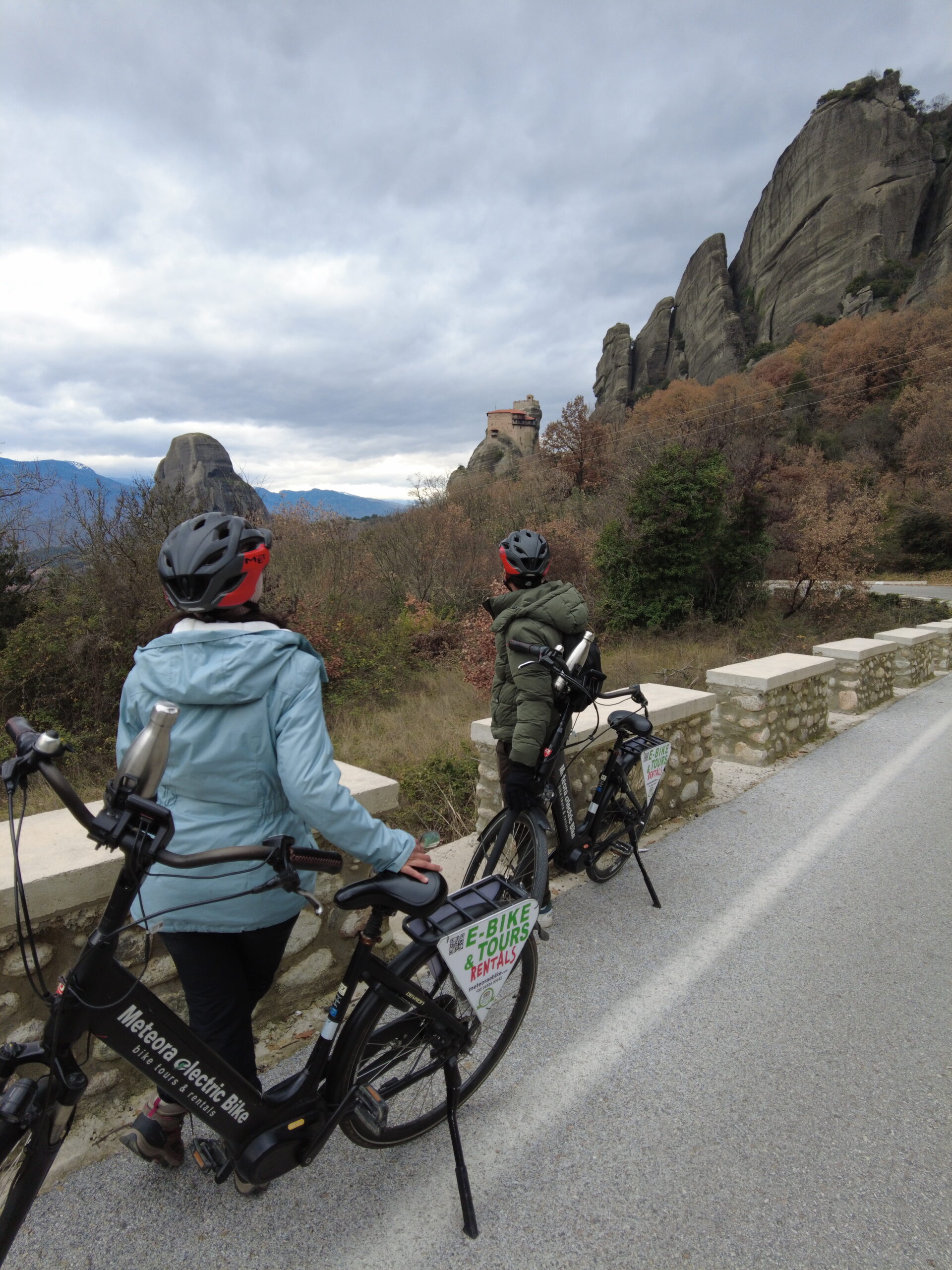
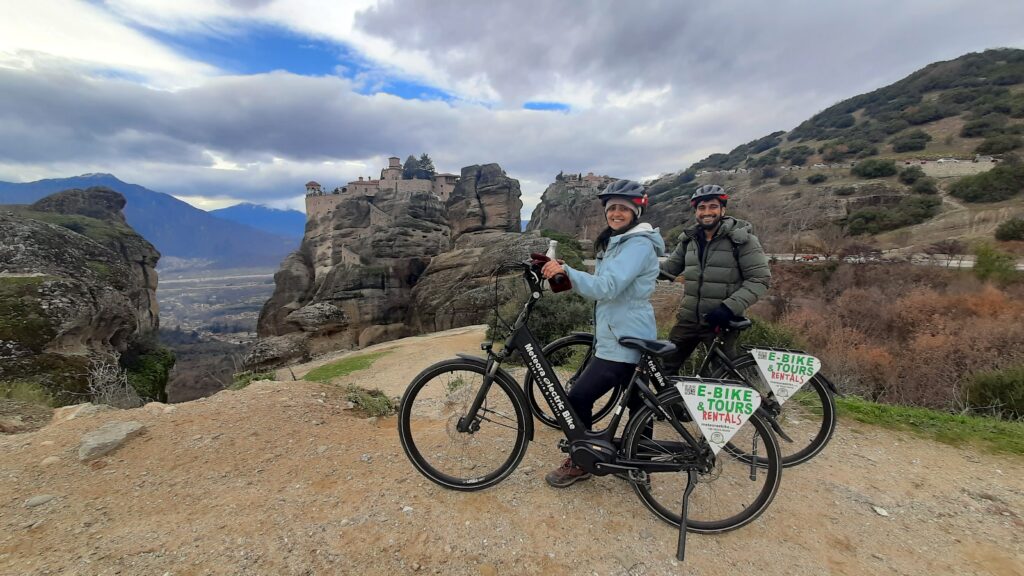
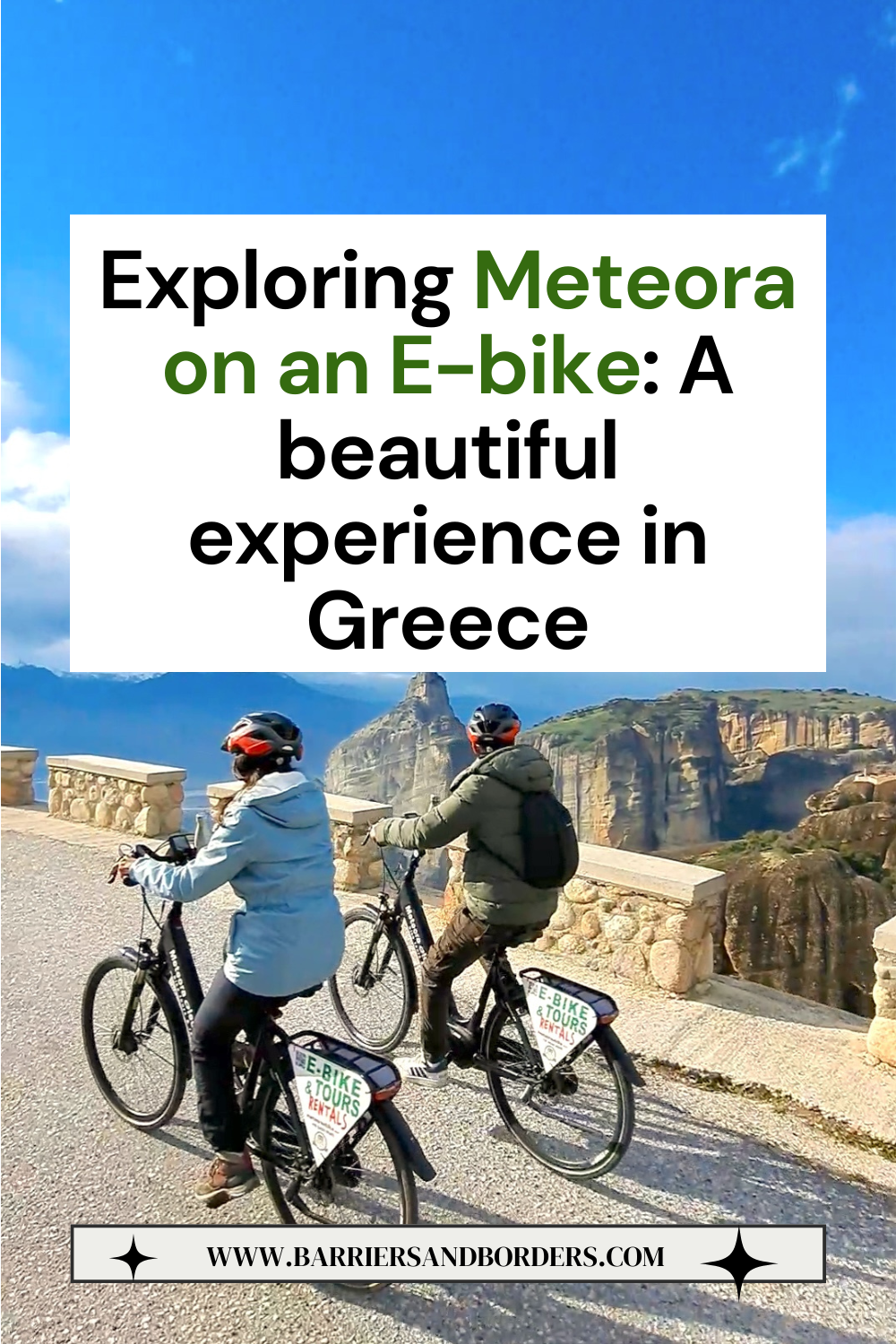
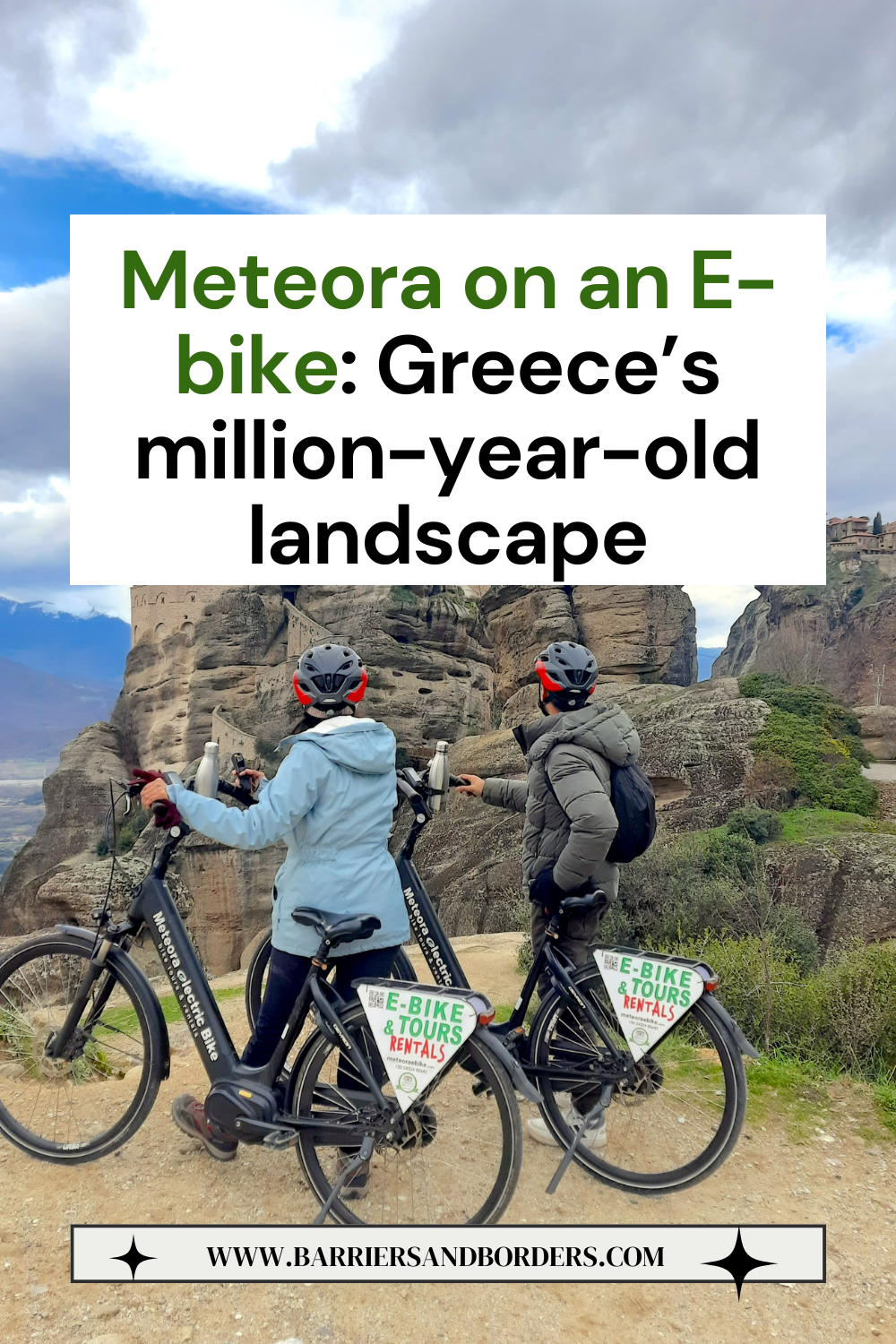
One of their e-bike tours begins in the village of Kalabaka. Although the terrain is fairly steep, the ascent still feels like a breeze. It doesn’t take long, even for amateur cyclists, to get used to the battery-powered acceleration. The instructions are simple: shift up to gear 5 for ascents and down to 2 for descents. With bikes available for all ages and sizes, it’s a delight to watch tourists—young and old alike—strapping on their helmets and cycling up the hills.
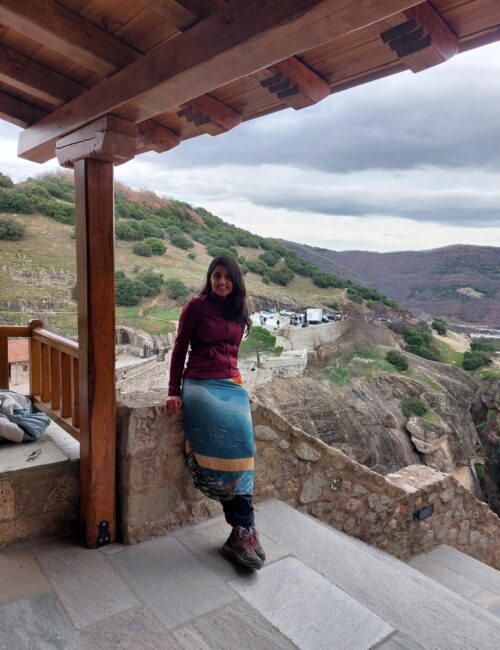
The first stop is the Holy Monastery of Great Meteoron. Perched at an altitude of 2,000 feet, this is the biggest and oldest monastery in Meteora. From its vantage point, the panoramic view of the valley below takes away even the slightest of fatigue. As sunlight spills over the fields far below, the morning mist gently lifts, unveiling the Pineios river shimmering in the distance and a valley that seems to stretch out endlessly in every direction.
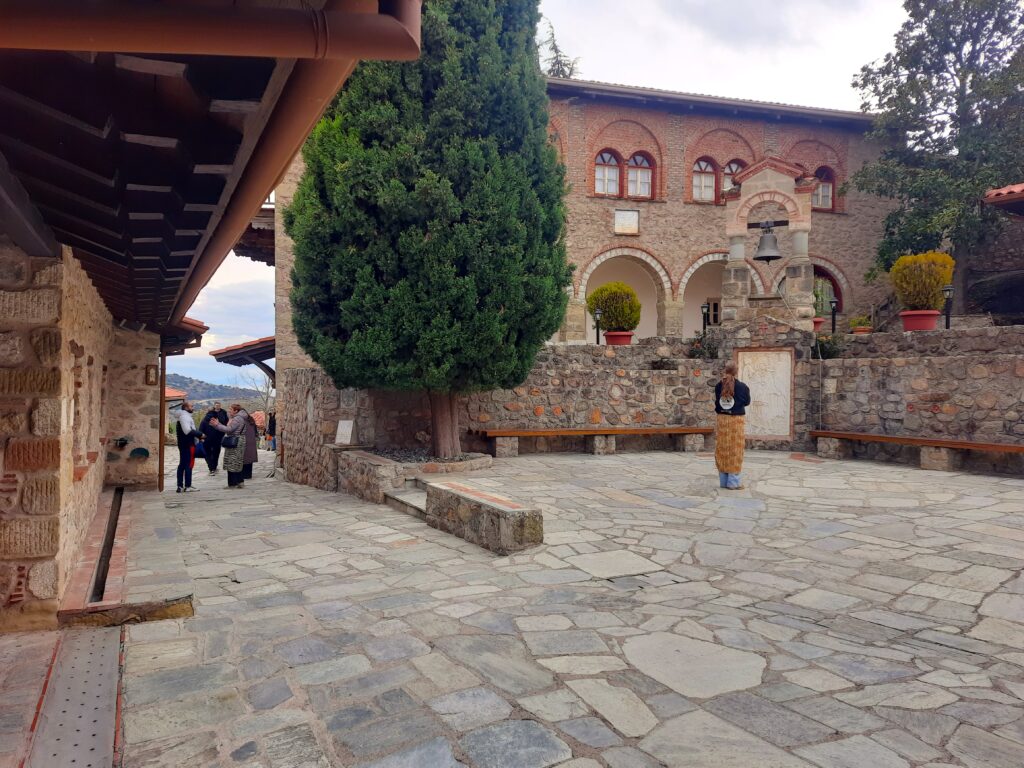
At the monastery’s entrance, women are offered scarves to cover their legs, a sign of reverence in most Eastern Orthodox traditions. The monastery complex, built primarily of stone, is a beautiful mix of Byzantine and Ottoman architectural styles. First founded in the 14th century, it sits atop a huge monolithic boulder, almost appearing to float. Its name, Meteoro, meaning “suspended” in Greek, feels perfectly apt.
The stone foundation camouflages so well with the rocks that the monastery seems like a natural outcrop. Inside, a small museum houses centuries of monastic history: handwritten scrolls, ancient records of persecution, and a display of robes worn by monks over the ages. Byzantine frescoes glow on the arched ceilings, transporting visitors to an alternate era.
But Meteora’s history traces back even further than these ancient monasteries themselves. In fact, the first recorded inhabitants of these vertical cliffs were ascetic hermits, who, in 800 CEs, carved out little niches to live in complete isolation. At a time of political instability in Greece, these hermits sought refuge from the expanding Ottoman Empire in these high-perched rock faces. To be in this stillness, in this silent space among clouds, is what drew the monks this far, and this high up—they believed they were closer to the Supreme.
Thankfully, remnants of that time still remain. The wooden ladders and ropes that carried people to the caves are visible even today. Whenever the monks felt threatened, they would draw the ladder up, making it impossible for intruders to reach them.
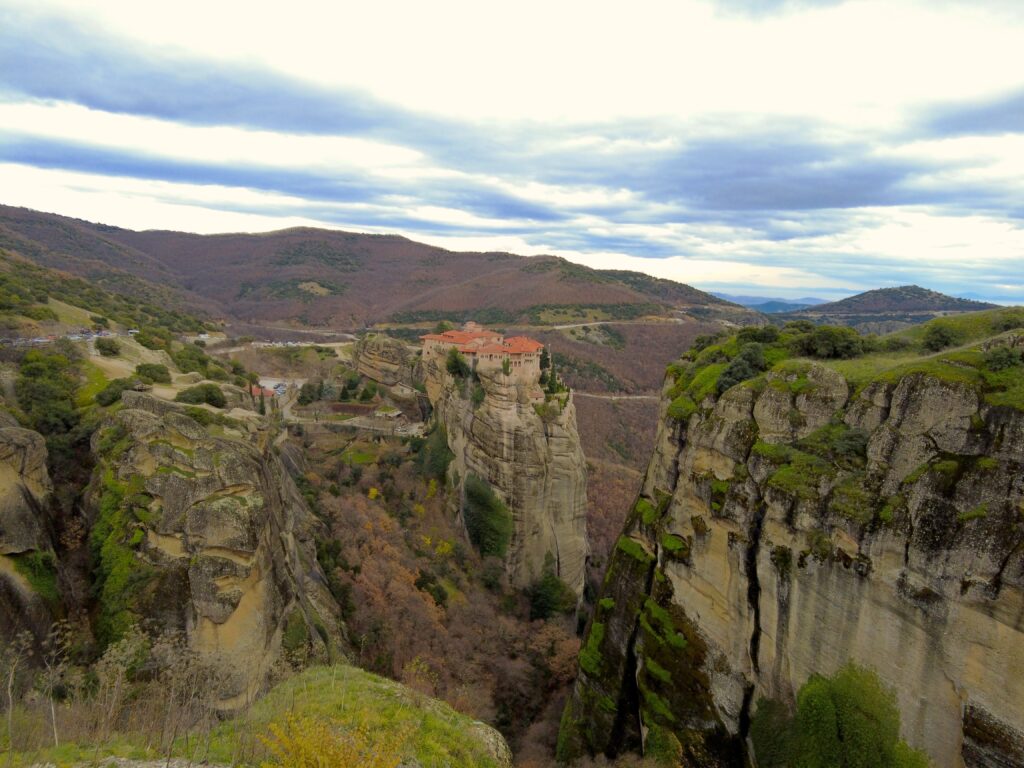
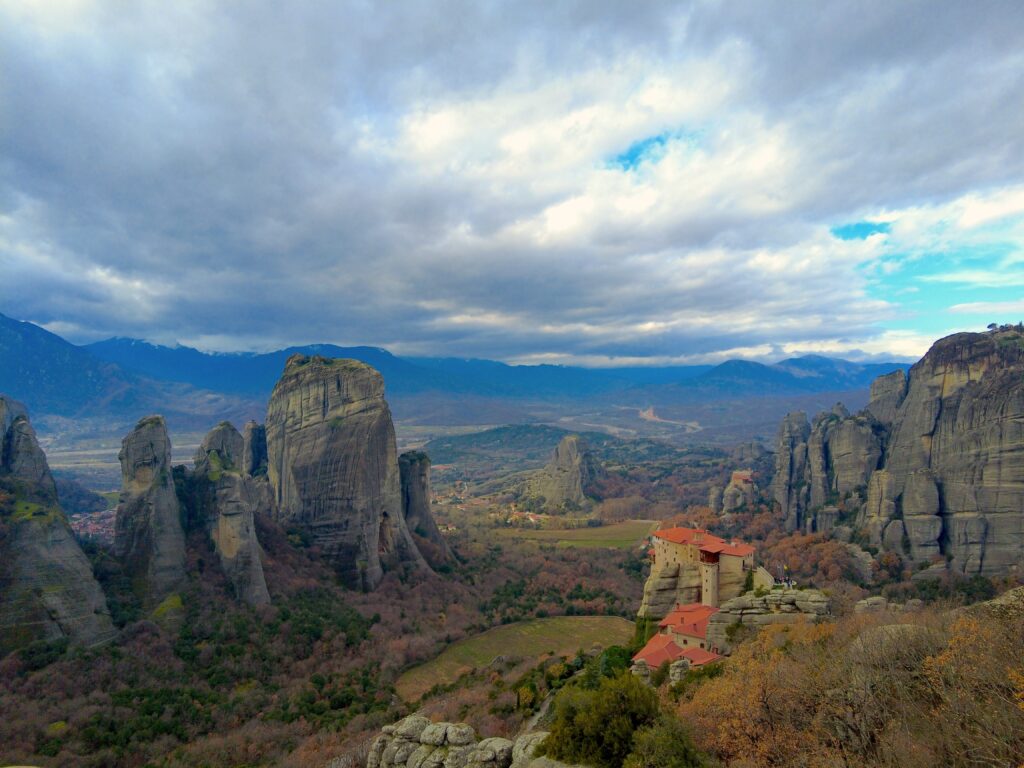
Even in late December, the visiting riders are stunned by the valley’s autumnal colours. Trees flaming in shades of gold, orange, and deep reds. Every turn brings a new vista. On the final stop of the ride, Vasilis has something lined up his sleeve—a hidden viewpoint! From here, the entire valley, with the Roussanou monastery at the centre, looks utterly mesmerising—leaving viewers in silent awe.
This very spot is where Tyrion Lannister, the fictional character from the series Game of Thrones, is seen as a captive prisoner in the “sky-cells.”
The final descent is a smooth one through the village of Kastraki. The buzz of cars and the chatter of passersby now feels like a different world. From floating heavens, one returns to the tangible earth below.
In an age of road trips and rushed itineraries, this conscious four-hour journey enables visitors to live and appreciate each moment. No wonder Vasilis says, “the slower you go up there, the more you absorb its magic.”

Leave a Reply