
Peloponnese
Separated from the Greek mainland by a thin isthmus, Peloponnese is a land of ancient ruins where the winds carry myths and legends and where olive groves stretch as far as the eyes can see. It’s nothing like the Greece you’ve seen in magazines and newspapers; it’s that kind of Greece that invites you to slow down, stay longer, and indulge in simple pleasures of life.
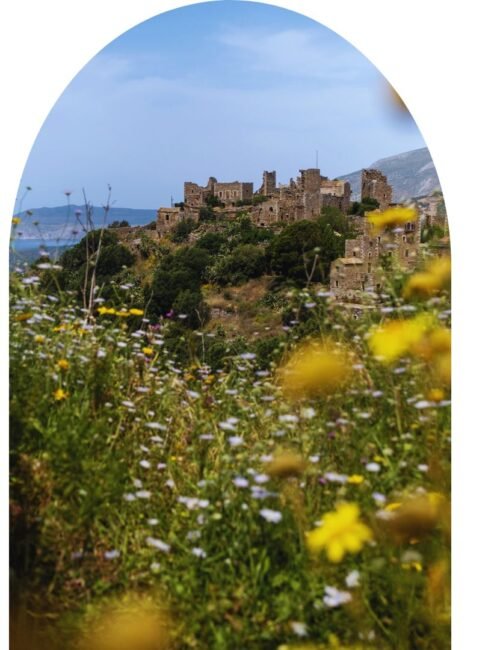
The Peloponnese is almost the size of Slovenia, yet it feels like a world of its own – its mountain ranges dotted with twisting paths trodden by heroes long gone and its historic stone-built villages reflect a past rich in folklore and craftsmanship. We’ve both spent quality time exploring this stunning peninsula, and still, we dream about wanting more of it. Such is the magic of the Peloponnese.
Things to see and do in Peloponnese
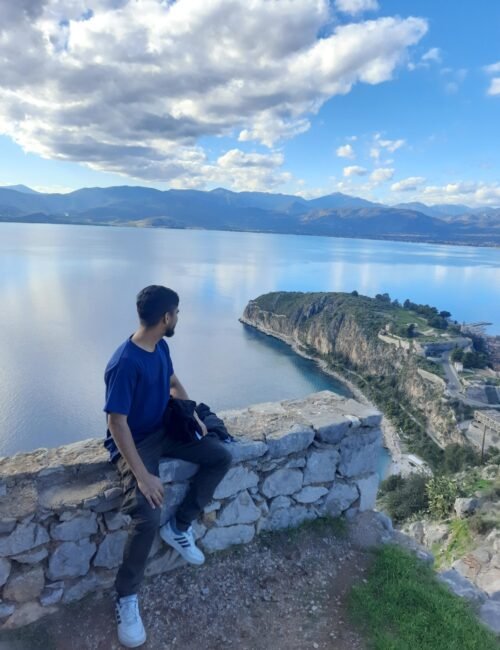
- Visit the city of Nafplion
- Stay in a boutique hotel in Monemvasia
- Hike the Menalon Trail
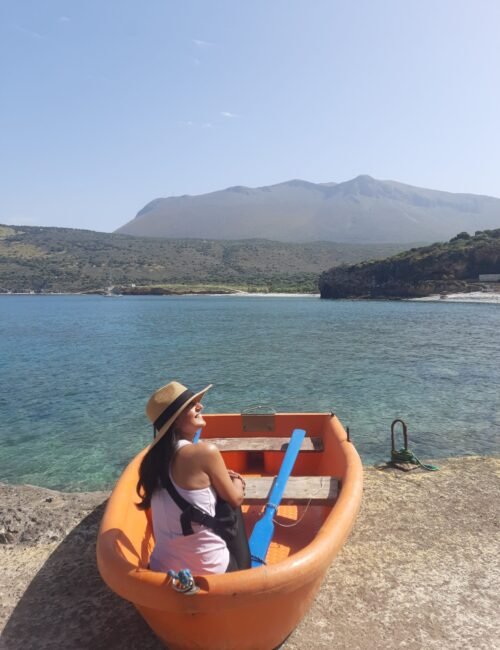
- Explore the Mani region
- Go for olive-oil tasting in Kalamata
- Cycle along the west Mani
- Kayak in Navarino Bay
- Bake embroidered bread in Psari
- Hike Cape Tainaron
Typical costs when traveling
Accommodation – Most hotel rates in the Peloponnese are highly dependent on the time of the year you’re travelling – high during the summer season and low during winter season. However, with climate change bringing increasingly frequent heatwaves, wildfires and drought periods across parts of Europe, particularly during the early and peak summer months, travel patterns—and consequently prices—could become less predictable.
Here’s a sample breakdown of accommodation costs in the Peloponnese:
Budget hotels or simple B&B’s could cost between €50-80, whereas mid-range hotels and unique guesthouses could be anywhere between €100-150. Prices for luxurious sea-side resorts or wellness retreats could go beyond €200.
Our Guide on Unique Accommodations in Peloponnese
Check out our in-depth guide on unique guesthouses, classy hotels and slow retreats in the Peloponnese. From beach-facing hotels to nature- and wellness-escapes in the mountains, these stays will make you want to linger longer in this beautiful corner of Greece.
Food – On both our visits to the Peloponnese, we’ve had a blast devouring delicious plant-based meals. How come Greece is so full of flavours? The meals are rich and nutritious, and not expensive! Highly recommend eating at local tavernas to get a good local vibe and feel of the place.
Disclaimer: We can only give a breakdown of plant-based meals.
For Budget travellers, expect to spend around €20-30 for daily meals including supermarket snacks, bakery breakfasts, supermarket hauls and taverna meals. Fine dining at coastal up-scale restaurants combined with wines could budget to €100 or more per day. Those looking to budget meals as per a mix of fine dining, self-catering, taverna meals should roughly consider €50-80 per day.
Our Guide on Vegan Eats in Greece
Read our blog about traditional dishes that are surprisingly plant-based + some practical tips for finding vegan food while travelling in Greece. We've also shared stories from Ancient Greece's food culture and how it has changed over the years.
Transportation – Transportation in Peloponnese without a car is a real challenge. While we don’t fully subscribe to the idea of road-tripping everywhere by car—we much prefer exploring places by public transportation—the region’s vastness means that many remote archaeological and historical sites aren’t well connected to the public transport network.
That said, KTEL buses connect most major towns and cities, as well as some popular landmarks, although services can be limited to a few departures a day. Depending on the distance, a typical intercity bus journey can cost around €5–25.
There’s also a small railway network in the northern Peloponnese, with trains connecting places such as Corinth and Kiato with Athens. However, train coverage is limited, so it isn’t a practical option for exploring most of the peninsula. If, like us, you’re relying on public transportation, we’d recommend checking schedules carefully and booking your bus journeys at the ticket office a day in advance whenever possible. Some online ticketing systems didn’t work particularly well for us, and having a ticket in hand gave us greater peace of mind -especially when services were infrequent.
Here are some bus routes we explored in the Peloponnese
1. Athens —> Nafplion (€15–20)
2. Nafplion —> Isthmos & Isthmos —> Monemvasia (€20–30)
3. Monemvasia —> Athens (€25–30)
Prices and schedules can change, particularly during the summer season, so it’s worth checking with KTEL locally before setting off.
The Peloponnese is so vast, diverse, and incredibly gorgeous. We genuinely hope there’s more car-sharing, shared-taxis options, and the slow-carbon transport options in the near future, making it easier to explore the region on a lighter carbon footprint without heavily relying on private cars.
Do’s and dont's
They say very few people are lucky enough to visit Greece even once in their lifetime. In that sense, we’re incredibly fortunate to have had the chance to visit not once, but twice. And each time, we’re fascinated by this captivating region. Here’s some tips on what to do—and what not do—while in Greece.
Do’s
- Do travel slowly across the Peloponnese. Rushing through all the historic sites and landmarks takes away the joy of experiencing rural Greek life.
- Do dress appropriately in monasteries and churches. Full-length, knee- and shoulder-covering dresses for women. No shorts for men.
- Do try eating delicacies in local tavernas. they're a delight.
- Do learn some basic greetings in Greek - they're the warmest and light-hearted people we've met in Europe.
- Do carry cash. Card payments are widely accepted, but cash is very useful in remote villages and towns.
- Do respect archaeological sites and natural wonders - stay on marked paths, be silent where needed.
Dont’s
- Don't travel in peak seasons - summers especially - prices of historical sites are twice than they're in shoulder seasons.
- Don't treat Peloponnese as just another summer destination - spring and autumn are great times too, with milder climate and fewer crowds.
- Don't waste food by ordering more than you can consume. Greek meals are generous, so be mindful of the quantity. Always ask for portion size, if unsure 🙂
- Don't rely on online information for bus and train schedules - double check with ticket office; schedules and frequency can sometimes change depending on the seasons.

Leave a Reply