


20 Responsible Travel Tips for 2026
Ever since the word ‘sustainability’ came into prominence – mostly during the industrial revolution in 1970s due to growing environmental concerns – it has put emphasis on sustaining resources and safeguarding them for the next generation. And rightly so. Minimising harm to our natural ecosystems, following a simple and minimal lifestyle, reducing one’s carbon footprint are some of the many essential steps we can all take to move towards a more sustainable future.
But, this ’do less harm’ mindset isn’t sufficient anymore. We are more than 50 years – and generations apart – and now, we need to move beyond reducing our negative impact towards actively creating a positive one. This calls for a paradigm shift – to restore, regenerate and enrich the places and communities we are a part of.
In tourism, this shift cannot happen in isolation. It calls for a shared responsibility among everyone who shapes the travel experience – travellers, destination management organisations, tourism boards, hotels, restaurants, local communities, tour guides, and so on. So, together when we have the opportunity to leave places better than we found them, then why not do it? Here are 20 effective and responsible tips for the travellers who want to do better this year – for themselves, for our planet, and for every being with whom we share this world.
Table of Contents
ToggleYou cannot get through a single day without having an impact on the world around you. What you do makes a difference, and you have to decide what kind of difference you want to make.
Jane Goodall



Research the travel companies you choose
Whether you choose a foreign operator or a local tour company, research their policies on responsible tourism. One of the easiest ways is checking for the B Corp label – it’s a global and independent for-profit business certification given to companies who meet high standards of environmental and social performance. In fact, the companies who hold B Corp are supposed to publish its impact score openly on B Corp Directory and rectify them every three years.
Stay in one region and fully understand its culture
You must have probably come across Instagram reels romanticising fast-paced travel, covering 10 European countries in 14 days. The problem with this travel style is its shallow and consumptive nature beneath its allure of ticking destinations off a list. Before you’ve even had the chance to understand a a place, immerse in its culture, connect with the locals, you’re already moving on to the next destination, and then the next. Everything becomes like a fleeting experience – take pictures, check the list, move on. You come home exhausted seeing a hundred things, yet deeply understanding none.
The only way to fight this shallow idea is to stay in one region and explore its culture. As in the case of India, the diversity between districts and neighbourhoods is vast, and so is the case for other countries. In a country as small as Belgium, for instance, the northern region of Flanders is completely different from its southern region of Wallonia – economics, food, landscapes, culture, and even language – things that can only be understood if you choose to stay longer.

Take a Skill-cation to connect with locals
Skillcations are vacations or trips taken to learn a new creative hobby or master a skill. It could be anything from learning Kalaripayattu (a 3000-year-old Martial art tradition) in Kerala to Surfing along the coast of Morocco. Many of these skills invite travellers to slow down and spend at least a week or two in the region – a fantastic way to connect with local teachers and directly support local workshops, family-run schools, women entrepreneurs and regional craftspeople.
In fact, psychologists say that skillcations can, indeed, leave you feeling restful and rejuvenated than simply lounging on a beach chair. It also challenges your brain the same way learning a new language does. And so, you return home gaining mastery over a skill, armed with a profound sense of achievement and competence.
Try thrifting in a new country
Thrifting might still be stigma in some countries, but it can be a great way to save on costs and reduce your consumption while travelling. This is especially relevant for winter trips, when buying warm jackets, sweaters, and accessories can become expensive. Instead of investing in brand-new clothes you might rarely wear again, why not explore a destination’s thrift stores and second-hand markets?
You might even find vintage collectibles and antique treasures that reflect the region’s history and character – another way to shop consciously. Thrifting, certainly, is an underrated responsible travel tip that benefits both your wallet and the planet.

Choose ethical safaris that prioritise animal welfare
First of all, people treat “ethical” as a subjective matter when it shouldn’t be – especially when it comes to the well-being of animals. But can either truly be ethical if the animal’s welfare is not the priority? True ethical wildlife tourism must put animals first – not human entertainment, access, or the perfect picture.
Choosing an ethical safari is quite challenging given that the line between genuine conservation and exploitation is dangerously blurred, especially when it comes to so-called wildlife sanctuaries.
In some Kenyan facilities, for instance, lion cubs are bred in captivity just so that they could be cuddled by tourists. Once these cubs reach maturity, they’re sold for trophy hunting and are eventually hunted down. So many of these operations run by sanctuaries conceal troubling realities behind their claims of rescue and rehabilitation. Some of these include lions suffering from malnutrition, untreated wounds, and stress-related health issues.
Considering all this, how can you tell whether a safari or sanctuary is truly ethical? The best place to start is by looking beyond its marketing claims and asking the right questions: Are the animals’ welfare and natural behaviours prioritised? Is human interaction limited? Does the facility contribute to genuine conservation, or does it profit from keeping wild animals in captivity?
To be very honest, we genuinely think that the INTENT of a tourist is the most important while choosing a safari. If your intent is to spot wild animals at any cost, these operators will go to any lengths to guarantee that experience. But if you intent is to experience the wild – to appreciate the landscapes, observe animals in their natural habitats, and notice the insects, birds, and smaller wonders that make an ecosystem thrive – rather than simply ticking the Big Five off your list, you may discover something more meaningful: a safari that respects wildlife, embraces the unpredictability of nature, and allows you to experience the wilderness on its own terms.
Take Antarctica off your travel bucket list
Tourism to Antarctica is a THREAT to its already fragile ecosystem. Because travelling to earth’s last remote island may offer a once-in-a-lifetime experience—but it comes at a significant environmental cost. Reaching this icy wilderness involves long-haul flights or carbon-intensive cruises, ultimately contributing to rising temperatures and accelerating the melting of its ice sheets. Of course, it also result in threatening the habitats of whales, penguins, and seals, introduces human-borne pathogens to its unique wildlife, damage the flora that could take decades to regrow due to its harsh environment, and our very presence could affect the penguins and stop their breeding.
A responsible traveller who genuinely cares for the planet, should TAKE OFF Antarctica from their bucket list. Because it’s valuable to us if left wild – it can continue to be a buffer against climate change and help store the world’s freshwater.
Avoid domestic flights within the country
Transportation—particularly air travel—is one of the largest contributors to tourism’s greenhouse gas emissions. As international travel becomes increasingly accessible and affordable, the demand for flying continues to rise, and so do our carbon emissions.
If you’re travelling abroad, one of the most effective ways to reduce your carbon footprint is to choose lower-carbon transport once you arrive. Instead of taking domestic flights for shorter distances, consider travelling by bus, train, shared taxi, or ferry wherever possible. These are also great ways to experience regional landscapes and local cultures along your journey.
Respect people’s privacy while taking photos
We all love street photography while travelling. However, with social media becoming a battleground for clickbait posts and attention, the line between documenting and invading someone’s privacy could become a blur.
A photo that may seem as an expression of our creativity or a cultural snapshot could feel embarrassing or even threatening to the person in it – especially when it’s shared online with thousands of strangers. Before taking a picture of someone, ask yourself: Am I simply capturing the place or am I turning a person into a prop for my story? When the person is clearly the subject of your picture, it’s always good to ask for their permission. If they decline, respect their decision.
Eat largely plant-based diet – it’s delicious!
Food is such an integral part of travelling, and every region has its distinct flavours and ingredients. But, the carbon footprint and environmental cost of a plant-based diet is significantly low as compared to meat-heavy or omnivorous diets.
This report, for example, suggests that beef produces around 60 kg of greenhouse gas emissions per kilogram. Whereas peas produce around 1 kg per kilogram. That means beef can have roughly 60 times the carbon footprint of peas by weight, which is super high.
Eat plant-based on your trips – it can also be a great way to discover and learn some traditional dishes that are accidentally vegan. In fact, in all our travels, we’ve seen that veggie or vegan food can be easily found if some pre-trip research has been done. Check out some of our Vegan Guides here.
Choose home-swapping instead of big hotel chains
Home-swapping is such an amazing (& sustainable) way to experience a place like a local. There is no stress of dynamic pricing or unavailability of accommodation during high season; makes your stay feel less like a holiday and more like temporarily living in a new place – which is a great feeling!
We’ve tried HomeExchange in France, Morocco, and Belgium, and each experience has been wonderful. Beyond the joy of staying in a home rather than a hotel, we’ve enjoyed connecting with local hosts and discovering their personal recommendations for exploring non-touristy places.
Learn a few phrases in local language
This is one of the most underrated skills to have while travelling. Learning a few basic phrases in the local language can open doors to meaningful conversations, help you connect with locals, and make your visit feel more personal. Even a simple “hello,” “please,” or “thank you” can go a long way in showing respect for the local culture and the peopl.
You don’t need to be fluent or get every word right. It’s the effort that truly counts.
Choose indigenous-led tour companies or experiences
Indigenous people are the original custodians of the land you’re travelling to. And hence, when you choose companies that are led by indigenous guides or operators, it not only directly contributes to the local economy, but also helps support their families, protects traditional knowledge, and gives these communities a greater control over how their stories, lands, and heritage are shared with the world.
We came across an indigenous- owned and operated desert expedition company in a remote corner of Morocco, and camped with them in the Sahara. That was one of the most meaningful experiences of our 2-week Morocco trip! Check out our experience in this instagram reel.
Explore the place on two wheels
Exploring places on two wheels is a low-impact, low-carbon and low-cost experience. Cycling tourism is rising is many places – and rightly so. Our cities need to become healthier with lower AQIs and lower noise levels, and that is certainly not possible if we keep investing in car infrastructure.
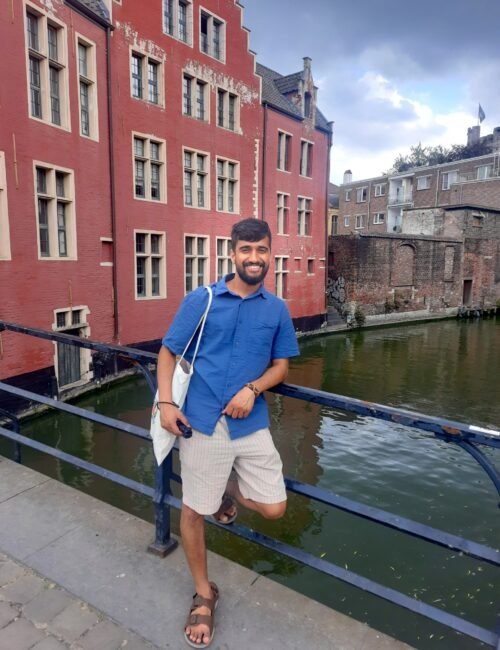
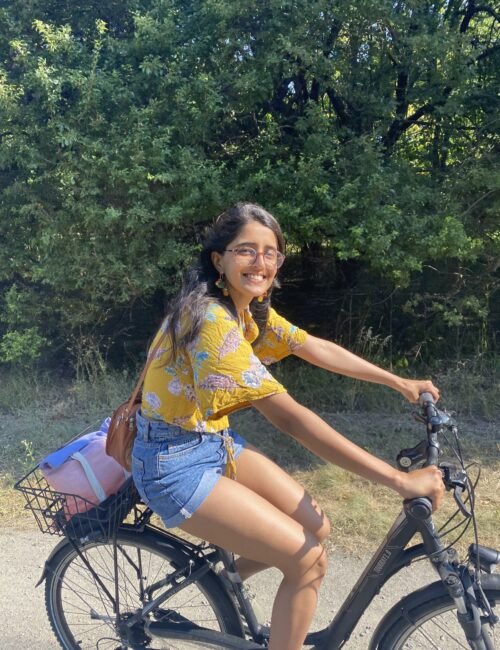
We’ve explored Greece’s ancient region of Meteora, Paris’ quaint neighbourhoods, and Ghent’s cozy corners—all on two wheels. We’ve even embarked on solo cycling adventures: Forum rode ~70 km from Vienna to Bratislava, while Shiva cycled nearly 420 km from Milan to Rome.
For us, cycling is one of the best ways to reduce the carbon footprint of a trip without compromising on comfort or the joy of exploration. It allows us to slow down, connect with our surroundings, discover places we might otherwise miss, and experience a destination at our own pace. Beyond being a low-carbon way to travel, it encourages a more mindful approach to our own well-being and to the sustainability of the places we visit. We highly recommend everyone to try pedalling the next time they’re on a vacation!
Don’t sign up to swim with marine animals
Swimming with or approaching marine animals like dolphins and orcas can significantly disrupt their natural behaviour. The oils from our skin or even the slightest of pressure could cause these marine beings stress, make them sick or make them prone to infections.
Moreover, dolphins or orcas can travel hundreds of miles a day in the wild oceans and seas. When they are confined in small concrete tanks of marine parks, they’re deprived of the space, stimulation, and freedom they need, often causing them psychological stress and unnatural behaviour. So, as responsible travellers who care about wildlife, please don’t sign up for such programs – even with captive animals – to swim with, touch, or interact directly. Our desire for a memorable holiday experience should never come at the cost of an animal’s well-being.
Buy Food Souvenirs instead of plastic ones
Plastic souvenirs are out, and food souvenirs are in.
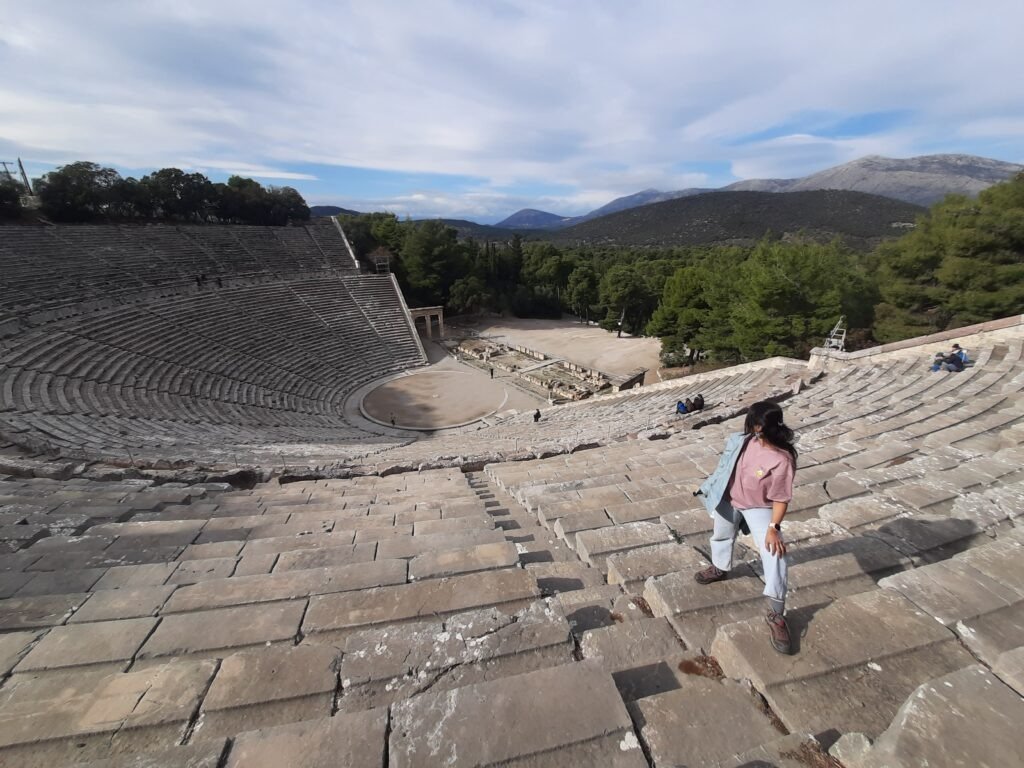
For the last 5 years since we started travelling together, we’ve made it a rule to say no to plastic souvenirs—and to antiques as well. Our parents have repeatedly expressed disappointment that we bring home nothing more than snacks, herbs, and edible treats. But for us, these consumable items, however short-lived, genuinely help to keep the memories of those places alive in our minds long after the trip has ended. For example, on a recent trip to Peloponnese – a gorgeous peninsula in Greece – we brought home spoon sweets (a traditional confiture of fruit preserved in sugar syrup), mediterranean herbs, Greek mountain teas, corinthian raisins, and a traditional Greek coffee. We also bought a GI-tagged, flood-resistant variety of rice from Kerala.
We believe these edible souvenirs help bring little pieces of travel back into our everyday lives. It’s also a great opportunity to share the incredible stories behind them with our family and friends. And that’s we recommend everyone to make this tradition a part of your travels. It’s so much fun!
Check out our feature in this Travel and Leisure article on Why Travellers are Bringing Home Food Souvenirs
Learn and follow local rules
We go on a holiday far from home, and forget that the destination we’re visiting is also someone’s home. The waste we generate while on a vacation doesn’t magically disappear. And so it’s our responsibility to learn about the place’s waste segregation rules and follow them.
Whether it’s separating dry waste from bio waste, or disposing plastic boxes in the right bin, take the time to understand local waste disposal and recycling rules. These may differ from what you’re used to back home, but following them is a meaningful way to minimise your environmental impact while travelling. In Greece, for instance, the sewage pipes are old and disposing tissue paper in the toilet isn’t permitted. This is not the case in the rest of Europe. That’s why it’s crucial to check country-wise rules.


Pack light for ease of movement
Travelling with minimum luggage gives you flexibility to move around faster. You can take more public transportation with manageable bags instead of relying on private taxis. It also discourages impulse buying of unnecessary souvenirs, disposable items, and heavy-product packing.
On both our two-week trips to Morocco and Greece, we travelled with a single backpack each – no suitcase, no cabin bag. What this experience really taught us was how little we actually need to enjoy the trip to the fullest – you learn to prioritise what you truly need, rewear clothes, and let go of the temptation to buy more.
Explore lesser-known destinations
In the past few years, you may have seen protests in popular destinations like Venice, Barcelona with locals holding signs “Tourists go home!” One of the reasons for this is overtourism. When demand for hotels and bnbs rise in one city, rents and cost of living goes higher too, which pushes the locals out from their own neighbourhoods. Tourists, too, end up in overcrowded queues and cultural sites.
How did travel change from ‘facing the unknown’ to ‘racing towards the well known’? Everyone rushing to the same destinations, taking the same photographs, and even eating the same food.
As a responsible traveller, you can choose differently by seeking out lesser-visited destinations, exploring second cities (Thessaloniki instead of Athens), or travelling during the shoulder season. These choices can mean fewer crowds, lower travel costs, and less pressure on local communities and infrastructure. More importantly, they also allow you to discover places on their own terms, while helping tourism benefit a wider range of communities.

Leave behind single-use plastics
We’ve been talking about plastic alternatives for decades, and yet we haven’t been able to fully eradicate it. Plastic bags, wrappers, straws, cups are still creating massive waste, and polluting fragile natural areas.
When it comes to destinations, particularly rural towns and villages, they lack adequate waste management and recycling facilities. So when tourist numbers surge, managing the additional waste becomes an even greater challenge, and much of the plastic waste ends up in landfills or in incinerators. This further contributes to air pollution and environmental degradation.
Plastics take hundreds of years to break down, slowly leaching toxic chemicals into our soils and waterways, and eventually, in our bodies. As responsible travellers, we can help reduce this burden by carrying reusable items and refusing single-use plastics.
Take Social Media Detox
We pay thousands of dollars to travel afar, and spend the majority of our time scrolling through social media. It’s such a pity, no?
Taking Social Media Detox helps, especially on trips, because you are fully present in the new place you’re visiting, there’s no pressure to photograph and post on social media, and a break from endless notifications finally helps you recover from stress and anxiety. Going offline also forces you to look up, naturally engage with locals, notice smaller details in your surroundings, and eventually, have slower and fuller days.
Read our article on Going Offline in Gstaad, as published in Air India’s Namaste magazine (Page 14)
Being able to travel to new destinations and cross borders freely is in itself a privilege. And often, our privileges are shaped by how we see and think about colonialism, economic inequalities, and power dynamics between Global north and south. Responsible travel starts with traveling on a lighter footprint but also extends to acknowledging these facts each time we pack our bags and step out.
Like the Post? Save it & Read later!







Leave a Reply