
Our Honest HomeExchange Review: Is It Worth it & Is It Safe?
Imagine you travel to Paris, and get to stay in a local Parisian’s home instead of cookie-cutter hotels that lack any culture or individuality! You would love it, right?
Well, that is now possible through HomeExchange. And guess what? We did exactly that last year: we stayed at a local couple’s home in the quiet outskirts of Paris, borrowed their bikes to explore nearby attractions, cooked our comfort meals in their sun-lit kitchen, and even received personal recommendations for unique things to do in this city of love. But, you know what the best part was – that it didn’t feel like we were “visiting” Paris, instead it felt like we were “living” in Paris. All thanks to this wonderful platform that is changing the way people travel and experience hospitality. Continue reading for our honest review of HomeExchange.
Table of Contents
ToggleSome links in this post are affiliate links. If you purchase through them, we will earn a small commission at no extra cost to you. Thank you for being here and supporting our work. 🤍
Traveling is a brutality. It forces you to trust strangers and to lose sight of all that familiar comfort of home and friends. You are constantly off balance. Nothing is yours except the essential things – air, sleep, dreams, the sea, the sky – all things tending towards the eternal or what we imagine of it.
Cesare Pavese

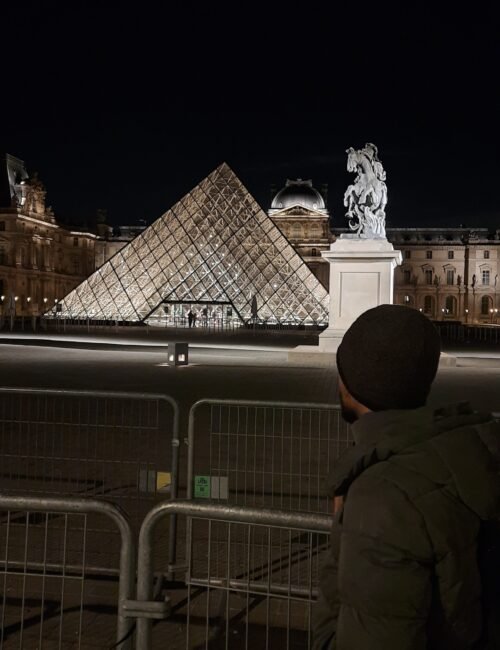
What is HomeExchange?
HomeExchange is just like the name suggests: exchanging homes. If you’ve watched the film The Holiday starring Kate Winslet and Cameron Diaz, you’ll remember how they both swap homes to get away from their relationships. They trade everyday comfort for a thrilling adventure, far away from home. Kate Winslet moves to sun-drenched Los Angeles to stay at Cameron’s huge mansion, while Cameron moves to Kate’s cozy countryside home in Surrey.
The only difference with the real-life HomeExchange platform is that it offers way more flexibility than the simultaneous, reciprocal swap shown in the movie.
There are two types of home exchanges:
Reciprocal Exchange: Just like the movie, you could swap your home with another member, either at the same time or during periods that are convenient for both of you.
GuestPoints Exchange: With this one, you can give GuestPoints to the member in exchange for staying at their place. You can also receive GuestPoints from travellers who wish to stay at your place while you’re away. There is no actual money involved with GuestPoints; the only fee you’ll ever pay is the annual membership fee of $235 (USD).
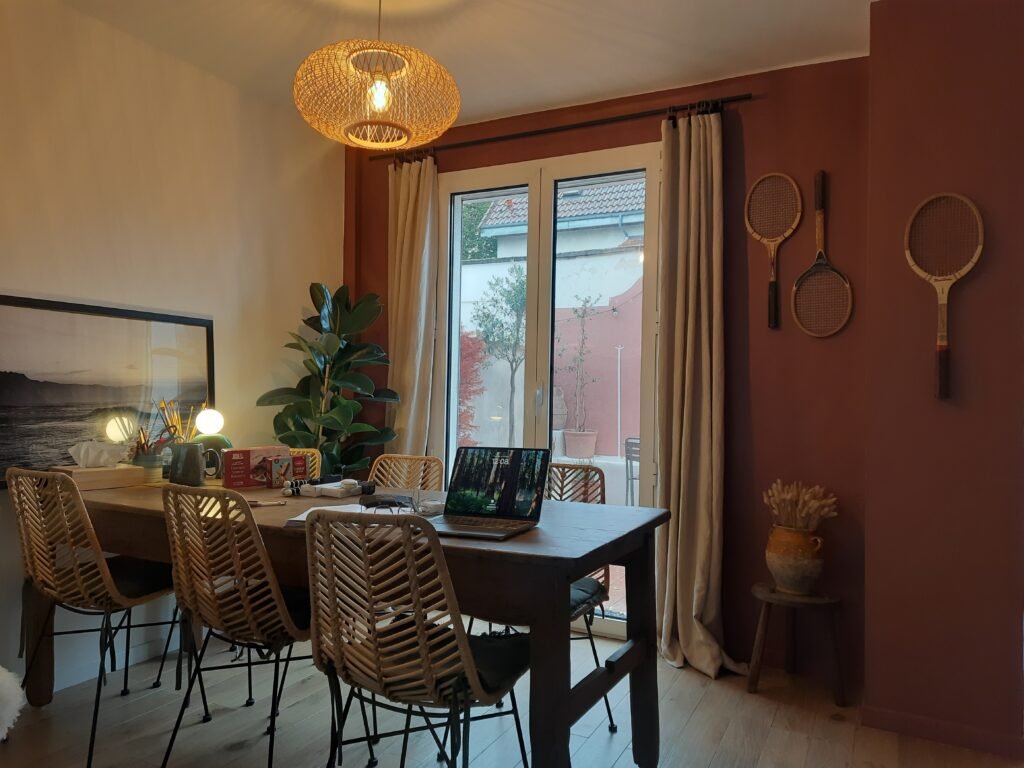
How is HomeExchange a sustainable option?
At its simplest, HomeExchange is based on sharing our resources and fuelling an economy that’s high on trust and reliability. Such a platform makes use of existing homes and includes locals in the tourism model, rather than mindlessly building hotels that sometimes have very little to do with its surroundings.
To understand how HomeExchange is sustainable, we need to reflect a bit on what’s unfolding in popular destinations around the world.
You must have seen an increase in protests in Venice, Barcelona and Lisbon, with locals holding up signs that say “Tourists go home.” One of the major reasons for these protests is “over tourism,” that means too many people visiting the same place at the same time. And this results in a high demand for hotels/bnbs and other short-term rental accommodations in one popular part of the city. Such practices often leads to higher rents and an increased cost of living, making it harder for the local residents to afford living in their own neighbourhoods, and eventually, pushing them out of their cities.
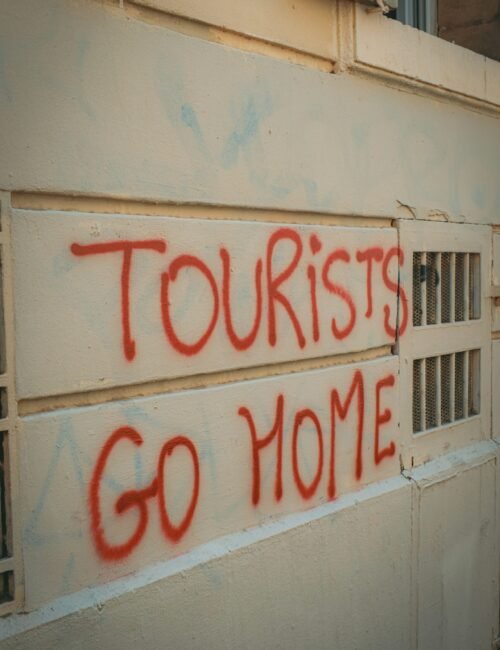
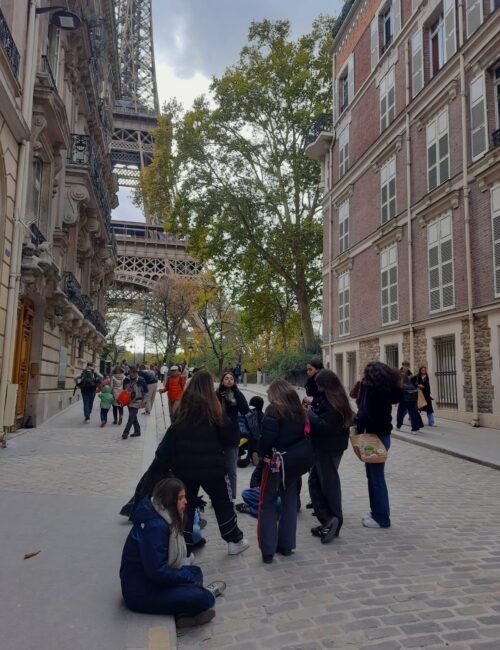
What also happens is – all popular spots – streets, restaurants, historic sites, and natural hotspots get either overcrowded or polluted or are completely destroyed. This makes it difficult for both the visitor and the resident to enjoy the city the way they should. That’s where the tension begins – between the tourists and the locals, leading to mass protests over mass-tourism.
HomeExchange, on the other hand, is unlike any hotel/Bnb. Because we’re using a space that was never built for tourists, but is first and foremost someone’s home, we’re more likely to respect the space and take care of belongings entrusted to us. It actually feels like our stay, in someway, is “benefitting” a local, rather than the opposite. That’s why we believe HomeExchange takes us back to the oldest form of sustainable travel.
Tip: The easiest way to understand whether a company is truly “sustainable”, and not greenwashing itself is by spotting this little B-Corp label on their website. It’s a global and independent for-profit business certification given to companies who meet high standards of environmental and social performance.
How does HomeExchange work? 5 easy steps for a smooth experience
We’ve used HomeExchange in 4 different countries – in Europe and North Africa – and have been successful in being accepted as guests in all four. And, if you follow these easy peasy 5 steps, you can, too, have a beautiful exchange in a beautiful home!
Step 1: Sign up on HomeExchange
The first step is to sign up on the HomeExchange website by creating your user profile, uploading photos of your home, and adding an authentic bio that includes your interests, hobbies, profession, etc. Remember: the more accurate information you provide in your bio, the better your chances are of getting accepted by hosts around the world. Think of it as a way for someone to get to know you and connect with you before they can trust you with their home.
Step 2: Search for homes
Once your profile has been approved by HomeExchange (which usually takes about a day or so), you’ll receive ~1,300 Guest Points in total (800 welcome GuestPoints and 500 membership bonus), with which you can start browsing homes in destinations you’d like to visit. While searching for homes, you can use filters like location, guestpoints range, property type, number of bedrooms, primary or secondary residence, pet-friendly homes, and many more to choose what best fits you.
Your acceptance to get hosted will largely depend on your first message, so please write a warm, inviting message requesting a stay. Here’s an example of our message:
Hi XYZ, hope you’re well 🙂 We’re Forum and Shiva, an Indian couple based in Germany. We’re visiting Paris next month from the 9th to 12th April, and would love to stay at your cosy abode. Here’s a little introduction of us: (what you do, why you’re visiting Paris, why would like to stay at their place….) If you think we would be a good fit for your home, we’d be pleased to do a GuestPoints or Reciprocal exchange with you. Happy to share more details. Look forward to hearing from you. Thank you!

Step 3: Finalise your exchange
Your hosts will pre-approve the exchange if it works out for them, and then it’s your turn to finalise everything. Caution: Before you finalise, ALWAYS ALWAYS double-check the host’s description to make sure they aren’t asking for any fee. DO NOT sign any contractual agreement. Many hosts around the world will ask for a cleaning fee, and that, in no way, is a part of HomeExchange’s contract. Ensure that you clear all your doubts before fully finalising the exchange.
When our first request was pre-approved by the Parisian couple, we politely asked them if we could video call just to get to know each other a bit – and they agreed to it! It was such a beautiful moment to connect with them 🙂
Step 4: Get ready for the swap
After you’ve finalised all the practical bits, get ready to be a guest or welcome guests in your home.
If you’re hosting someone while you’re away travelling, ensure there is enough closet space for the guests to keep their belongings. Make some room in the fridge. On our HomeExchange in Belgium, for instance, our hosts had prepared the ultimate guide for a smooth arrival which included several important instructions: how to operate cooling and heating systems, a guide to segregating waste, how to use dishwasher, washing machine – all things that guests need help with. That was so convenient to have because we didn’t have to pester them with the smallest things!
If you’re being hosted, make sure to leave the place better than you found it. Remove bed linens, towels, tea towels, and put them in the laundry bag. Remember, it’s someone’s home and not a hotel.
Step 5: Goodbye with a thank-you note
This, for us, is non-negotiable: bidding goodbye with a note expressing gratitude. In fact, we truly believe that such gestures can reflect positively on your HomeExchange profile, and leave a good impression of your home country and people you represent when abroad. Each time we leave the hosts’ place, we leave some small gifts or a thank you note as a goodwill gesture.
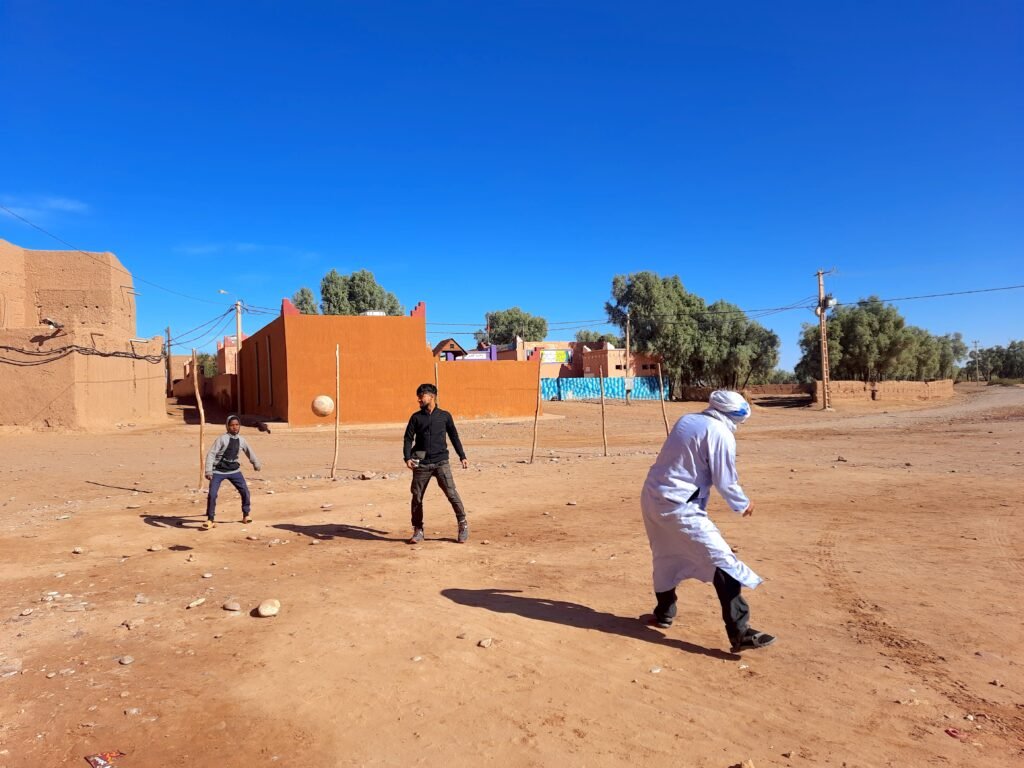
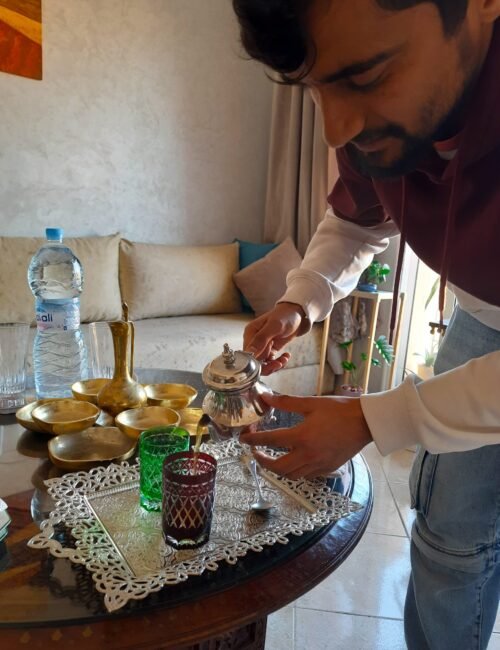
Let us share with you a story: When we stayed at an elderly couple’s home in Marrakech, our original plan was to only stay for 2 days, and then head towards the Sahara Desert. Unfortunately, that year, Marrakech was hit by torrential rains – all roads to the Sahara were shut for 2 days at a stretch, public transport was disrupted, so many local businesses affected; our non-refundable hostel bookings too, took a hit! It was a catastrophic incident!
Since our HomeExchange place was not the primary residence of our hosts, we asked them if we could stay another day or two, given this exceptional situation. And they agreed to host us! That was such a relief!
We left a note expressing our sincere gratitude for offering a shelter in an emergency.
Is HomeExchange really worth it? And is it safe?
HomeExchange is certainly paving the road for a more affordable, sustainable, and meaningful way of travelling. We love the sharing economy and community aspect of it. And, we genuinely believe it’s worth trying, considering the reasonable membership fee.
Especially, if you’re travelling only during holiday periods – when most hotels and bnbs tend to increase their rates through dynamic pricing – HomeExchange can save you some bucks. Plus, isn’t it wild to stay in completely different types of homes around the world? You learn so much about the micro-culture, traditions, and way of living. So yes, we do believe it’s worth it, and can change the way we travel.
However, just like any other online platform, HomeExchange too, comes with its own quirks – and some scammy profiles – but with vigilance, you can easily navigate past this for a safe and smooth experience.
Always check for verified profiles
While browsing through host profiles, make sure to always contact the verified users. You’ll see a verficiation blue tag on their profile. To make things legit, the HomeExchange team personally checks documents and photos uploaded by users before granting approval.
Read guest reviews
You can also read reviews of other guests who’ve swapped homes with your hosts – do they sound genuine? Is anything being flagged here? How many exchanges have they done in the past?
Reviews have really helped us make a solid judgement. In Morocco, for instance, one of our hosts was offering breakfast and dinner for a fee. And we couldn’t have known if we hadn’t read the reviews. We still went ahead with our stay, but it’s always good to know about such (hidden) costs beforehand.
Don’t pay for anything outside HomeExchange
Don’t ever pay any deposit upfront; HomeExchange manages every payment through their portal. Also, beware of fraudulent emails or SMS requesting payment. Avoid sharing personal details like contact number in your first message to the host. If you find something fishy, immediately report to HomeExchange’s team.
Places where we HomeExchanged (with pictures)
Here are 4 places where we stayed via HomeExchange. All 4 are unique and fabulous in their own ways!
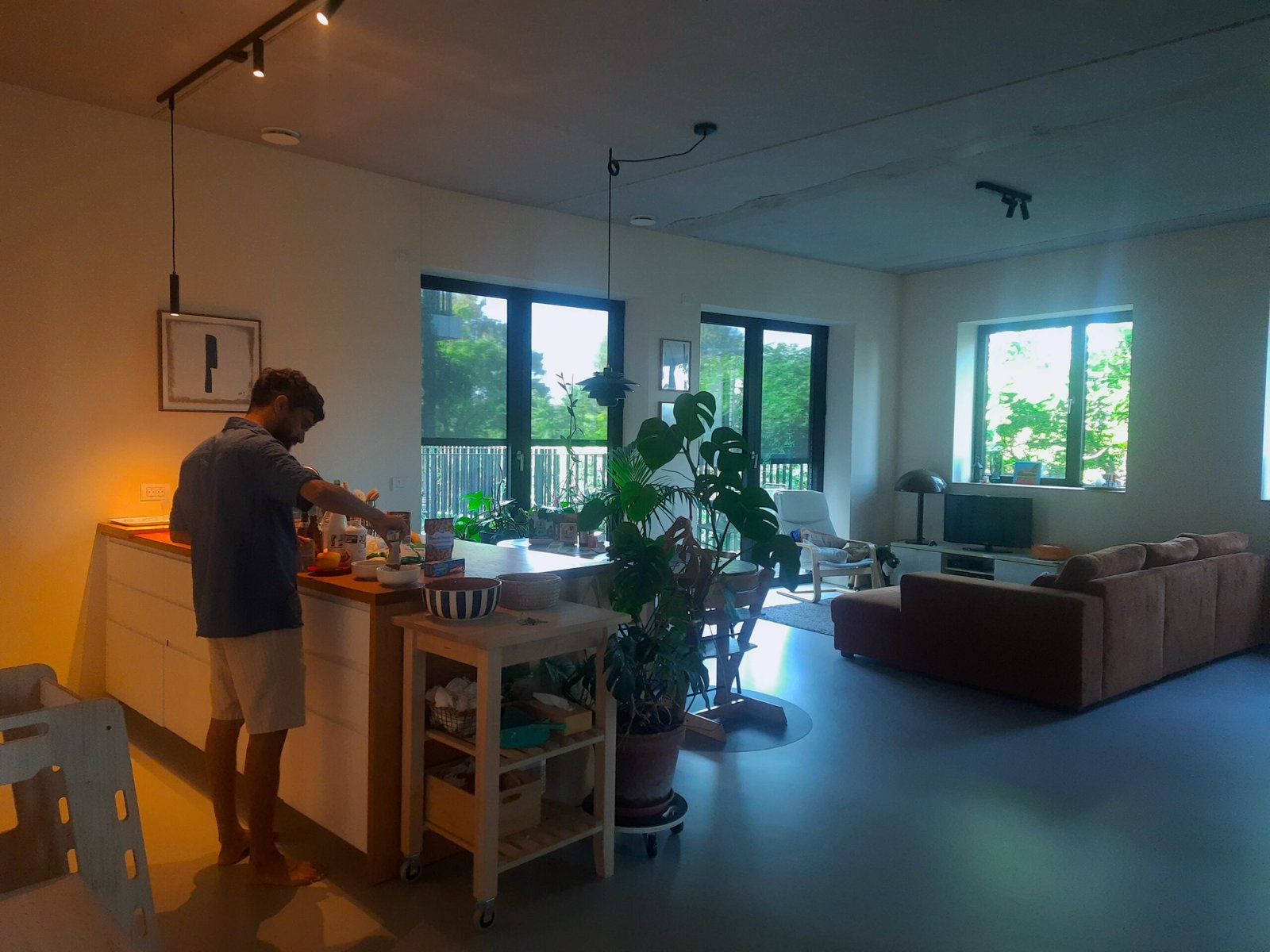
Ghent, Belgium
A local family's apartment in one of the largest sustainable cohousing developments in Belgium.
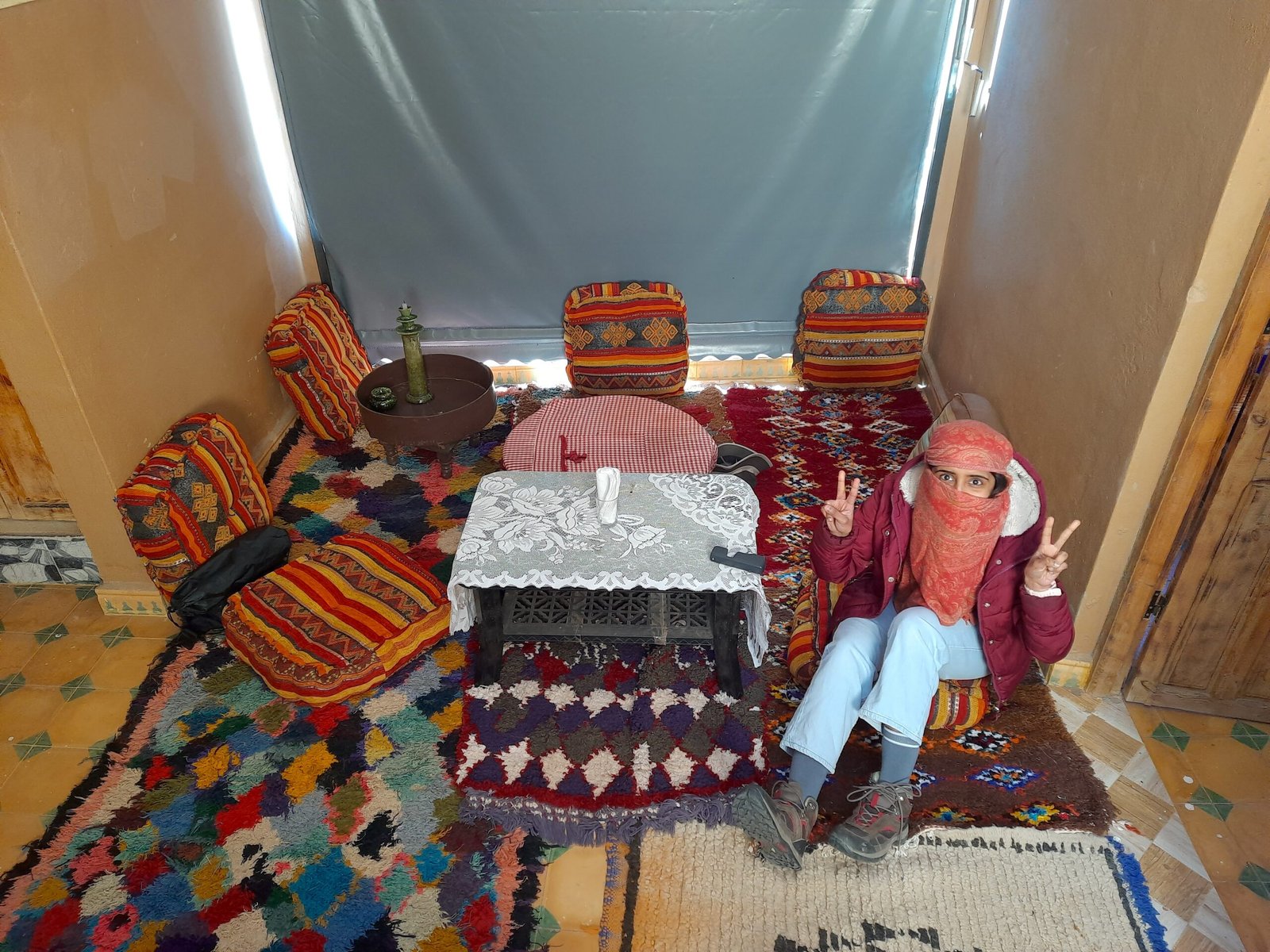
M'hamid, Morocco
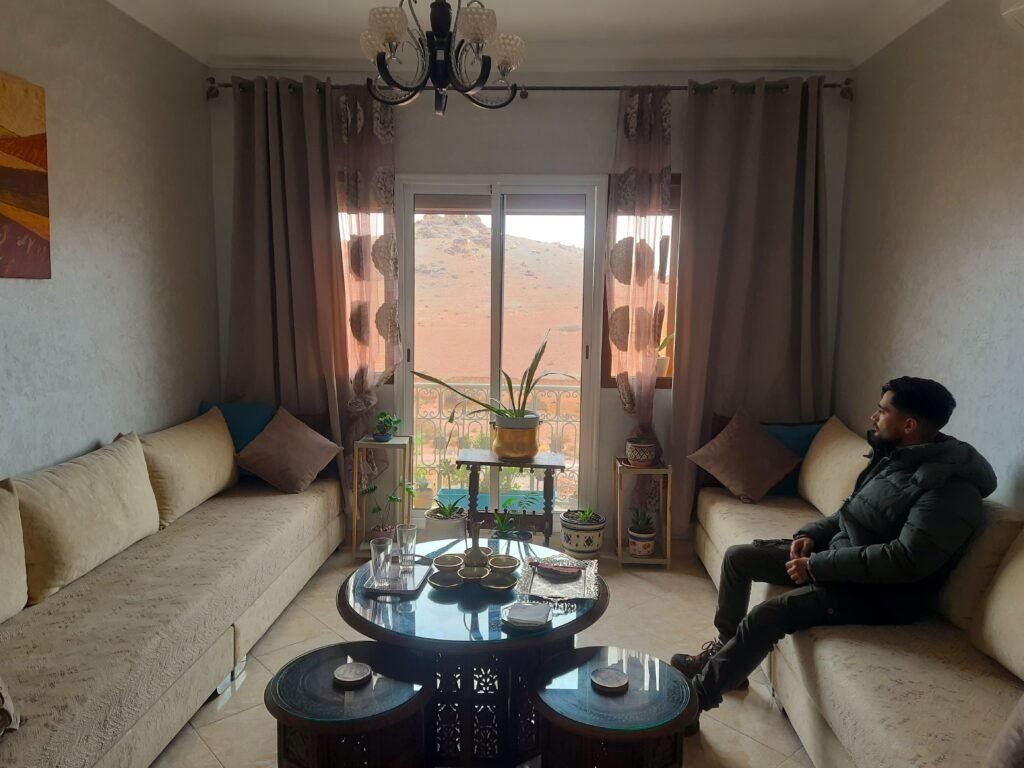
An Amazigh’s (indigenous people of North Africa) home in the fringes of the Sahara desert.
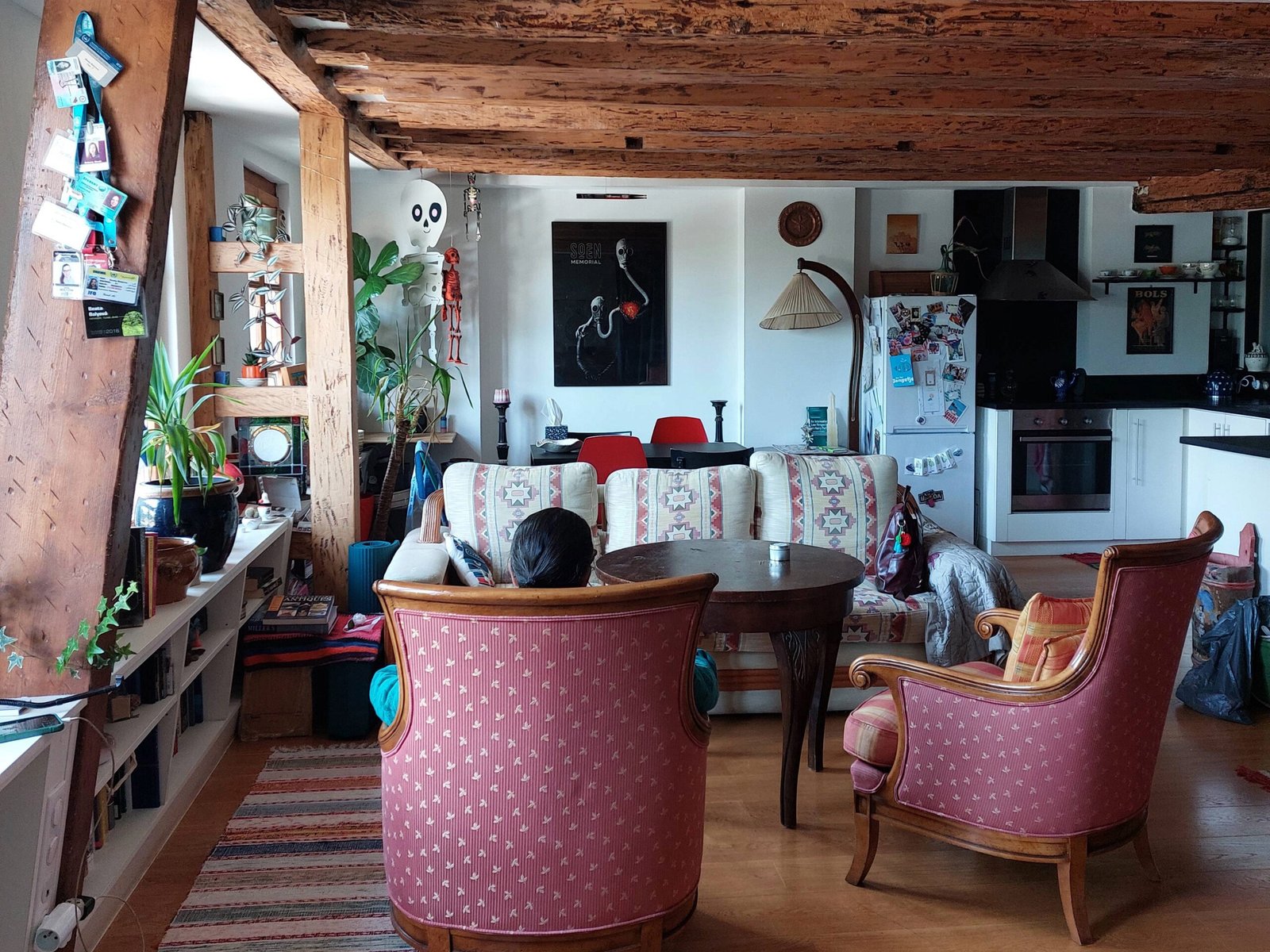
Strasbourg, France
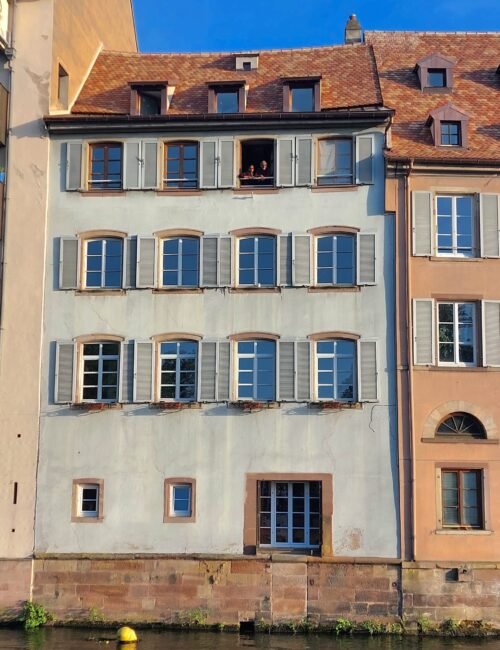
Our stay in a half-timbered building overlooking the river Ill. Our parents loved it!
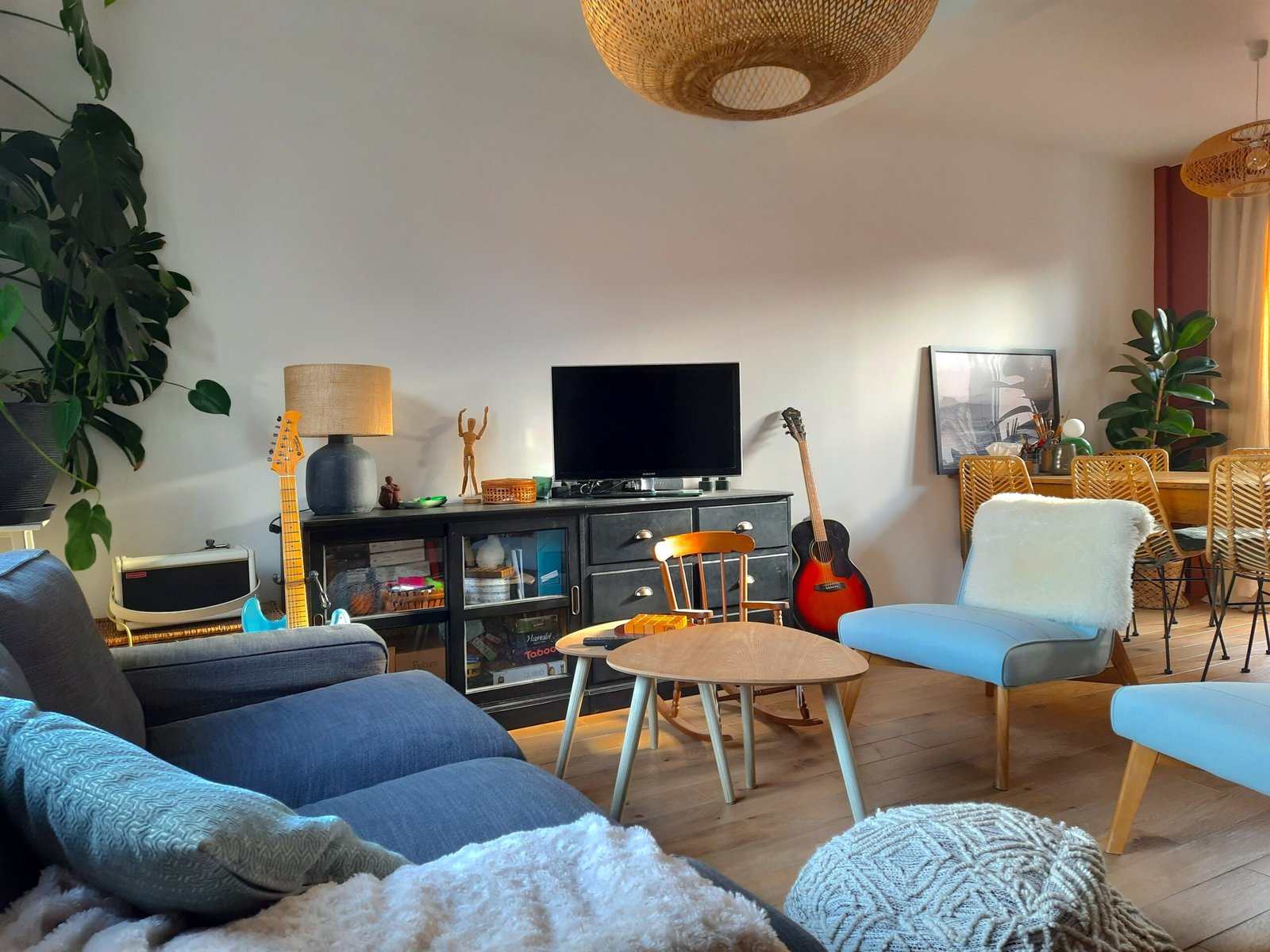
Paris, France
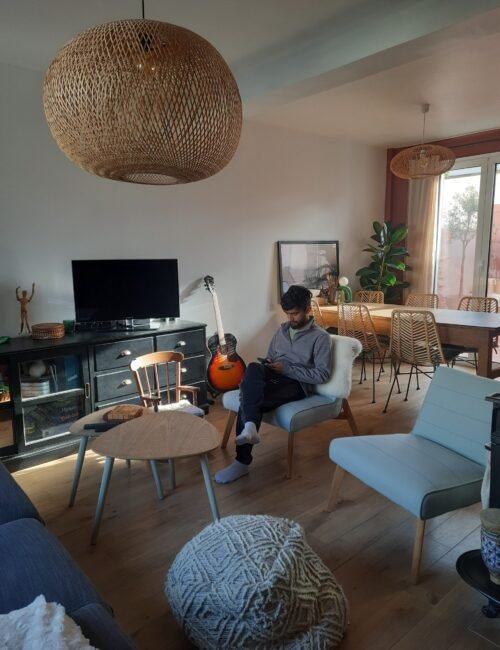
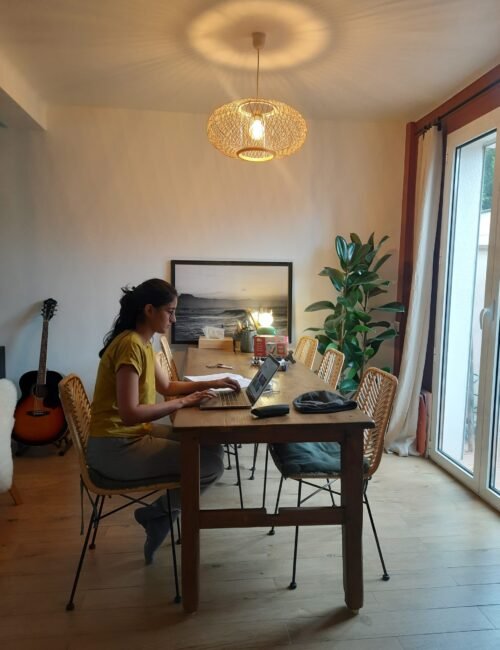
A local couple's independent house in the outskirts of Paris - they had many musical instruments!
FAQs
Here are some common questions that we get asked regarding HomeExchange. Hope it helps you.
1. Did you have any fears about safety, privacy, theft, or damage before the swap?
We are a bit concerned about the damage. But that’s why it’s important to lay out clear housekeeping rules and get to know your guests a bit before you hand over your home. Though HomeExchange does offer theft damage worth $500. (You can check about this on their website)
2. What made it feel different from a hotel or airbnb?
Staying in this home was unlike any hotel/Bnb. We realised that we were using a space that was never built for tourists. It was someone’s home. We were temporarily taking care of someone’s belongings. It felt like our stay was actually benefiting the local community than the opposite. Also, many hotels are located in touristic areas, which can get very noisy during the peak season. Hotels, Bnbs or any short rental accommodation options often pop up in “popular” parts of destinations, which then leads to higher rents and an increased cost of living. This makes it harder for the local residents to keep afford living in their own neighbourhoods and eventually pushes them out of the cities. Another important point to note is that Airbnb did start with a similar community-driven idea, but later the outcome turned into something very different. We think the hope with home exchange is that because no money is involved, it stays closer to the original spirit.
3. Did travelling this way help save money?
A 100%. We naturally saved money on accommodations because the prices/Guest points in the HomeExchange app are not dynamic or demand-based, but rather based on the amenities and the type of home – countryside, city apartment, shared apartment, beach facing, hometheater-inclusive, etc. We also saved some bucks by not eating out 3 times a day.
4. Were your family members or friends supportive, or did they have concerns?
Our family members were naturally concerned, but also curious. Given the often negative news circulating online, it’s understandable to feel uneasy about having strangers in your personal space.
However, after our positive experience in Paris, we decided to reserve another stay – this time in Strasbourg – with our parents, who were visiting us from India. They absolutely loved it. They could clearly see the potential, felt comfortable throughout the stay, and it turned into a truly wonderful experience for all of us.
5. What was going through your mind before handing over your home to strangers?
We haven’t done that yet, but we believe that when the timing feels right and we’re matched with suitable guests for our home, we’d be open to sharing it.We both genuinely believe that sharing our resources and fuelling an economy based on trust and reliability is the way forward, at least in the travel sector.
Like this Post? Save it on Pinterest!







Leave a Reply