
Mumbai
“Zara hat ke, zara bach ke, yeh hai Bambai meri jaan,” sings Forum each time the mention of Mumbai or her childhood home comes up in our conversations. And rightly so, as she’s spent all her life singing, dancing, living, breathing the air of Mumbai – the city definitely holds a special place in her heart.
When one listens to the song “Bambai Meri Jaan” — a melancholy-filled song sung by Mohammad Rafi back in 1956 for the film C.I.D. — one might think, Oh, what a sad, lifeless city this must be! It has trams, skyscrapers, metros, and yet seems to lack humanity (lines from the song).
But is it, though? Mumbai might be a city of many paradoxes, but it is also a city defined by its people — by their incredible spirit of kindness, grit, resilience, and community. Neighbours helping each other out during busy festivities; rickshaw drivers returning belongings forgotten in the backseat; fruit and vegetable vendors greeting passersby; and so many other small, everyday acts of humanity.
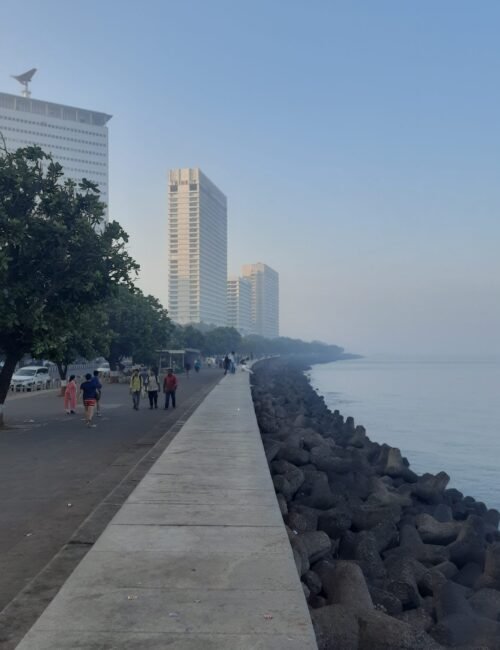
So, even though the song says, “Kahin building, kahin traame, kahin motor, kahin mill. Milta hai yahan sab kuch, ik milta nahi dil,” which means there’s trams, buildings, mills, but there’s no heart; Mumbai has always had something the song overlooks: a heartbeat of its own. And to hear that heartbeat, one must stay here longer, wander through its coastlines and run through its forests, chat with its people; only then can one truly hear it.
Things to see and do in Mumbai
- Hike the Gilbert Hill
- Visit Bhau Daji Lad Museum
- Walk around Ballard Estate
- Explore Sanjay Gandhi National Park
- Try chai & bun in Irani Cafe
- Sign up for night cycling in Mumbai
- Eat Pav Bhaji at Amar Juice Center
- Walk around Khotachiwadi to see the old Portuguese-style architecture
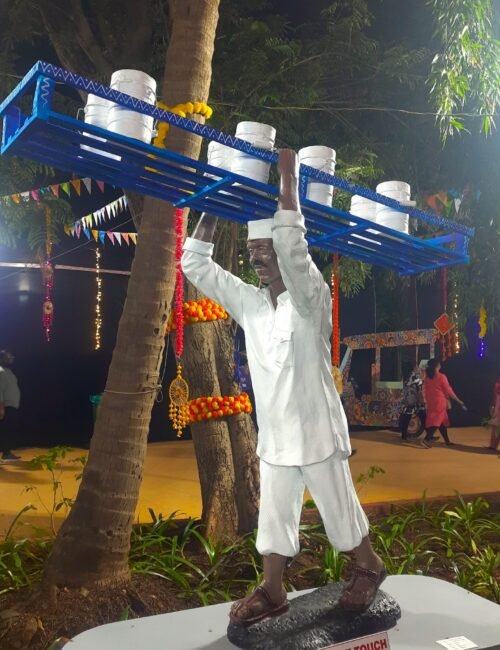
- Learn about the Dabbawallas
Typical costs when traveling
Accommodation – Where you stay in Mumbai can make a huge difference. Although the site of Mumbai city is roughly equivalent to Madrid, it’s extraordinarily dense. And navigating through its streets, traffic, and public transportation can feel overwhelming for a first time visitor. Our recommendation would be to book a hotel or a guesthouse in parts of city that are well-connected to some major monuments or to the airport (to make your first few days easier). Once you’ve acquainted yourself to the city’s pace, definitely explore lesser-known parts of Mumbai. Mumbai is generally safe for travellers, but as with any major city, it’s best to exercise caution when wandering around at night, particularly in unfamiliar or isolated areas.
Accommodation in Mumbai ranges from budget hotels and simple guesthouses to some of India’s most luxurious hotels. If you’re a budget traveller, you can find basic hotel costs from around ₹2,00–₹3,500 a night, while a mid-range hotel typically costs around ₹6,000–₹12,000. For a luxury stay, expect to spend ₹20,000 or more, with Mumbai’s iconic 5-star hotels and suites going considerably higher. Prices can differ based on the neighbourhood and season you choose to travel – prices during the monsoon season could be reasonable whereas during Diwali or Holi or any other Indian festival could rise significantly.
Food – The food scene in Mumbai gets trendier, sexier, and diverse with every passing month (quite literally!). The varieties of cuisine that one can indulge across this city is endless. And it’s not these high-sophisticated restaurants or those universal cafés which could be in New York or Shanghai, but these really street-style food places and hole-in-the-wall kinda joints offering some delicious meals.
As a budget traveller eating out for all meals, you can expect around ₹500-700 pp/day. We also recommend raiding the open-air fruit and veggie markets to check for some freshly foraged, local, seasonal veggies (some of them are special just to Mumbai!) If you’re looking to indulge in Mumbai’s upscale dining scene, budget ₹4,000 or more per person a day. However, a mid-range 3-course meal for two could cost around ₹2,000.
Transportation – Mumbai has one of the most extensive and functional public transportation networks in India. There are BEST buses, metros, trains, auto rickshaws, taxis, Ubers and Olas. The suburban railways are the city’s lifelines and one of the quickest ways to get around. The Western, Central, and Harbour lines connect much of the metropolitan area and the ticket rates are inexpensive. However, the trains get super busy and chaotic during the rush hours. So avoid travelling during office peak hours like morning 8.00 -10.00 and evening 17.00 to 19.00. Local train tickets (Second Class) costs between ₹5-30+ depending on how long the journey is. Minimum fare for auto rickshaws start at
The minimum fare for an auto-rickshaw in Mumbai is ₹26 for the first 1.5kms, and then ₹17.14 for whah additional km. Buses costs around ₹5-30 and taxis anywhere between ₹100-500+
Do’s and dont's
Mumbai is different for each and everyone: for some it’s a city of dreams, while for others, a city that’s taken away their dreams; some feel trapped in the endless chaos of its daily commute, while some romanticise the same train journeys; for some the city’s skyline speaks of sophistication, ambition, and high-end dreams, but for others, it’s reminder of dirty politics and unequal opportunities. Perhaps the Mumbai you come to know depends on what stage of life you arrive – whether as a teenager, an old parent, a curious friend, an aspiring professional – and what you are looking for when you do. But we hope when you do visit, you have a great time!
Do’s
- Do visit Mumbai with an open mind and heart - some things ca overwhelm you, some will fill you up with love.
- Do chat with locals, they're often happy to talk about almost everything in life.
- Do take the local train at least once.
- Do see Mumbai beyond the old areas - venture out in the suburban neighbourhoods.
- Do try local street food like Bhelpuri, Sevpuri, Pav Bhaji, Sandwich.
Dont’s
- Don't litter on its beaches and parks.
- Don't pay the rickshaw drivers lumps. Always go by the running meter.
- Don't block the train doors - it can get a bit aggressive, especially during the rush hour.


Leave a Reply