
Wiesbaden
In 2025, we moved to a completely unknown-to-us city in Germany, whose name we’d never heard of, and whose streets, stories and spirit were unfamiliar to us. Turns out, this place is Europe’s oldest spa city, and is home to 26 thermal springs.
Wiesbaden, a beautiful city on the banks of river Rhine, was once a Roman settlement. The Romans discovered its natural thermal springs around 6 AD, and laid the foundations for a spa tradition that has endured for nearly 2,000 years. Much later, European royalty started gathering here, and commissioning grand hotels, opulent bathhouses, and ornate residences. Despite being a close neighbour to a city like Frankfurt, that’s constantly evolving into a global commercial hub with tall, sky-piercing glass buildings, Wiesbaden has managed to preserve its neoclassical-era structures, their grandeur, and overall a significant part of cultural heritage.
With its centuries-old tradition of thermal bathing and its remarkable architectural heritage, Wiesbaden has long been celebrated as a place for restoration and healing. The city offers its visitors many unique experiences to slow down and unwind.
Things to see and do in Wiesbaden
- Visit 15 public thermal springs
- Try Riesling Wine
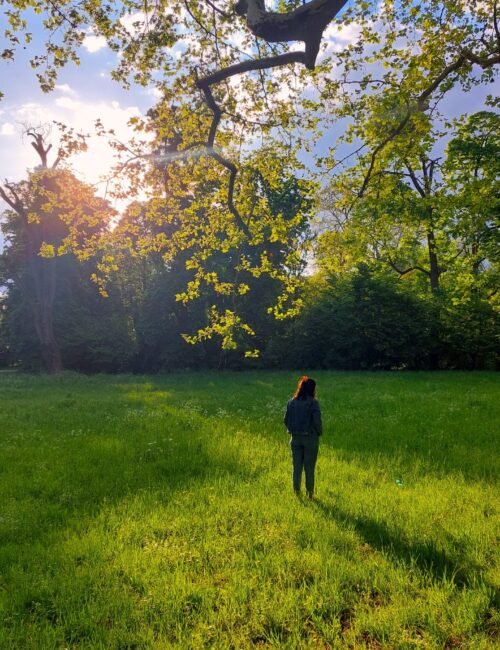
- Chill in the Biebricher Schloßpark
- Hike the Rheinsteig
- Relax in a 20-th century Irish-Roman bathhouse
- See a classical drama in Staatstheater Wiesbaden
- Take a wine tour in the vineyards
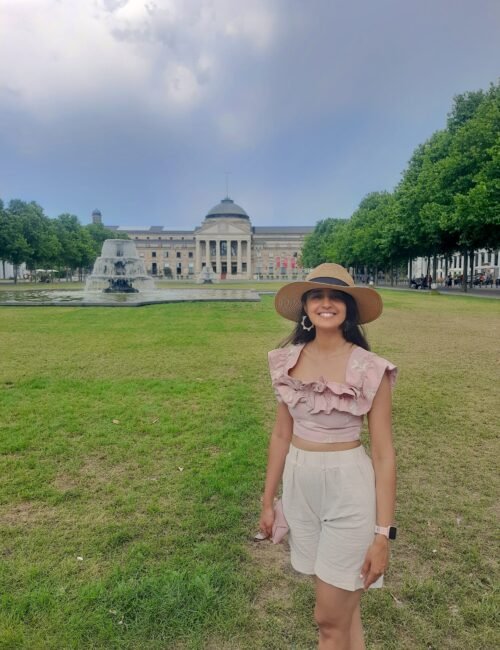
- Visit the Kurhaus for a concert
- Ride the Nerobergbahn - the only water-powered funicular

Typical costs when travelling
Accommodation – Wiesbaden is moderately expensive by most German standards. Budget hotels and hostels could cost anywhere between €50-80 pp/night. Whereas mid-range hotels could fall in the bracket of €90-160/night. Higher-end properties offering luxurious stays could go beyond €180/night. These rates can also substantially rise during the Winefest or Weinwoche (mid August – end August).
Food – Wiesbaden has some quirky and some healthy restaurants. We’ve written down everything about our favourite vegan hotspots in Wiesbaden. Check out the guide below.
A brunch including coffee can cost around €15-20, whereas a good mid-range restaurant meal might cost between €15-30. Expect a budget of €80 for a two-person three-course meal in Wiesbaden.
Transportation – Wiesbaden’s bus network is fantastic! The inner city is well-connected to the outskirts and nearby regions via ESWE buses. A single ticket within the city limits and to Wiesbaden-Biebrich costs €3,90, while a day pass for a single person costs €7,80 (not super reasonable though). All buses have Wifi, and are super clean and efficient. Check the bus routes, schedules, and ticket prices on ESWE or RMV website.
There are no tram and metro lines in the city, but there are S-Bahns (City railways) and RBs (Regional trains) if you wish to explore Frankfurt, Mainz or any other nearby cities and towns.
Do’s and dont's
Here’s a mix of practical tips, local etiquettes, and a few things that’ll help you get acquainted to the city’s pace and life.
Do’s
- Do visit Wiesbaden beyond its city centre.
- Do try to segregate waste whenever possible. They have a great segregation system. Check ELW for more info.
Dont’s
- Don't assume you need car - the buses and trains are efficient and timely.
- Don't treat the thermal baths like just another tourist attraction - they're part of Wiesbaden's identity and can be enjoyed slowly.
- Don't avoid the cruise trips on Rhine - these monster boats are a threat to Rhine's marine ecosystem and change begins with us all by choosing to not book a cruise.




Leave a Reply