Why We Chose to Go from Vegetarian to Vegan
“So why are you guys vegan? Weren’t you both vegetarian? It’s the same thing right?”
It’s been over 10 years since Shiva turned vegan, and 6 since Forum switched to veganism, and this question, alongside a long list of other things, gets repeatedly asked. The number one reason for us to go vegan is for the animals – if we love animals, then we shouldn’t eat them. Period.
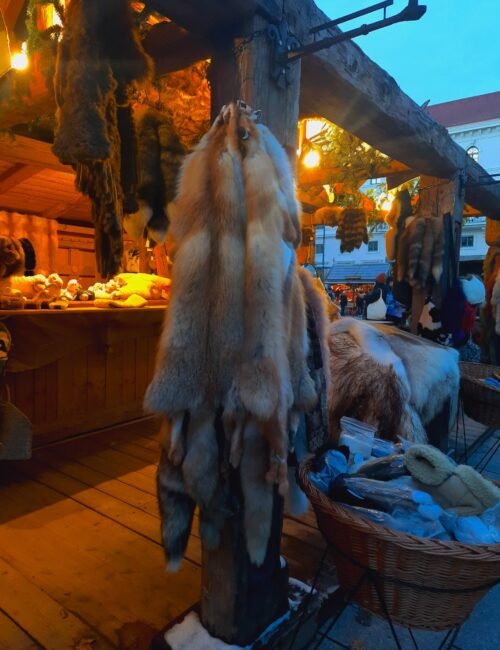
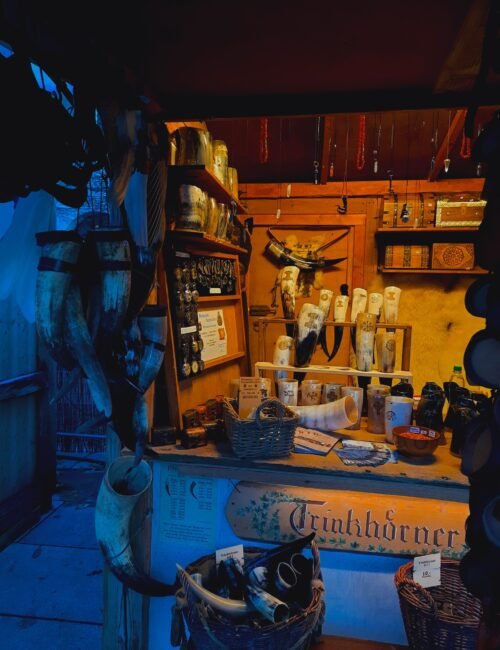
This has become even more clear ever since we moved to Europe. Because here, the contrast is quite apparent – on one hand, we speak of conserving wild animals and deep sea creatures, while on the other, we hunt them down to “restore balance” in nature and eat them. To give you some context, let us take you along for a stroll in one of Munich’s most bustling markets.
Table of Contents
ToggleVeganism is not about giving anything up or losing anything; it is about gaining the peace within yourself that comes from embracing nonviolence and refusing to participate in the exploitation of the vulnerable
Gary L. Francione
The Paradox of Human Intelligence
Viktualienmarkt, a 200-year-old food market in the heart of Munich, offers some of the best traditional dishes for gourmet and food lovers. And our visit too, this fine evening, was filled with curiosity and joy seeing all the fresh, precisely arranged farm produce and alpine herbs. But soon, our moods turned grey when we spotted octopus tentacles amongst pickled olives and truffles. It still bemuses us how a creature – as highly intelligent and superbly adaptive as an octopus – ends up on our plates from the depths of the oceans.
Today, we are even coming up with plans to commercially farm octopuses. Why? Because we believe our intelligence gives us the right to rise to the top of the food chain, extract everything we can from our surroundings, and then call it our way of “restoring balance” to the ecosystem.
The notion that no living being on our planet possesses a greater measure of intelligence than we humans do, is perhaps one of the most arrogant assumptions we can make. Because here we have an octopus – a creature capable of problem-solving, learning, using tools, navigating complex environments, and displaying remarkable forms of intelligence that is beyond what we can comprehend. Yet, it’s this “high-level” intelligence we use to forcefully manipulate nature, and decide who gets to live and who becomes our meal.
“Drink milk and you will grow tall and strong”
How do you artificially inseminate the very same cow that, in so many Indian households, is worshipped as sacred? How do you take her away from her calf, take her milk, and then convince the world (and yourself) that this is somehow an act of reverence? For us, this contradiction simply did not sit well in our conscience. Even though we were both born into vegetarian families, we couldn’t accept this idea that a cow happily gives its milk to us.
As kids, we learn what our families teach us as a way of life, and make it our own. Their worldview becomes our worldview, right? Similar thing happened to us. Until late 20s, we consumed dairy just like everyone else. In fact, growing up we were conditioned to believe that “Cow’s milk is an essential part of our diet. A child cannot grow up to be strong without having a glass of milk every day.” But, what we were not taught was that the milk we consumed was procured through a brutal process of exploitation – artificially inseminating cows, culling of male chicks and calves, premature slaughter of cows – none of this was taught to us in schools, homes, community. Whereas white revolution in India had already skyrocketed in early 2000s.
It took us many, many years to confront and finally discard a belief that had been built on brutality toward the voiceless animals. We both realised that the “vegetarian mindset,” however clean it may sound, still involves animal cruelty.
How does going vegan help the environment?
Animal agriculture is the single-most contributor to global deforestation. Would you believe that ~75% of agriculture land on the entire planet is used to grow crops to feed livestock. In very simple terms, we grow crops to feed animals, who we then eventually exploit for dairy, eggs, and meat.
Livestock farming is a resource-intensive industry, requiring vast amounts of land, water, and energy. To sustain it, forests are cleared to grow crops such as soy and maize, which are then fed to raise these farmed animals. When forests are cleared, we lose old-growth trees, biodiversity, plant species, and the habitats and resources that countless wild animals depend on. Due to this, animal agriculture contributes significantly to greenhouse gas emissions, particularly methane and nitrous oxide, further driving human-induced climate change.
EVERYTHING is interconnected.
When we reduce or eliminate our consumption of meat and dairy, we reduce the demand for these resources and help ease the pressure on our lands, forests, water, and biodiversity.
Our journeys to Veganism
Our journeys to veganism happened independently and organically. Shiva made his switch to plant-based living way back in 2016, after a brief conversation with a Belgian during his time volunteering in Auroville. To him, it was a simple reminder that milk is something only a lactating mother can produce for her offspring; it is not biologically possible that a baby consumes milk once the mother stops lactating. It was simple science, but one that helped re-wire the lessons learnt at home.
Meanwhile, Forum made her choice to become vegan a few years later when she moved to Belgium and watched documentaries like Cowspiracy and Kiss The Ground. She couldn’t look at milk and cheese the same way she did before.
Independence of thought and free-will was key for each of us, because such a decision is a personal choice. And for some reason, Belgium happened to be the wake up call for both of us!
Being vegan: not a distant dream anymore
Today, with the advent of social media, the vegan movement is growing at an unprecedented scale – it doesn’t feel lonely anymore to raise your voice for the right cause. There are thousands of Instagram and Facebook Vegan Groups to help with the issues you’re facing. So many young vegan doctors, nutritionists, yogis, health specialists are coming forward to openly discuss about the benefits of plant-based lifestyle. In fact, a recent study found that just 1 month of going vegan can slow down biological aging in a human body. That’s crazy!
In 2016, there were very few who knew what the term ‘vegan’ meant. There was clearly a lack of information and research. Ruling out milk from our diets meant that we had to try out new ways to substitute it, like making our own peanut or soya milk from scratch and fermenting our own yogurt using cashews and almonds. It was a process of trial and error. There was close to nothing in the market labelled as ‘Vegan’. We simply accepted that pizzas, chocolates, pastas and cheese-loaded nachos were no more in our “consumables” category.
Today however, the path of transition to a plant-based diet is a lot more accessible. Vegan alternatives to all forms of food are available with the growing demand. Right from milk, cheese and yoghurt down to various replacements for fish, meat and sea food, the market is teeming with new options to satisfy our taste buds. While some of these alternatives are simple foods & healthy choices, some others are highly processed foods that undergo several chemical processes in order to mimic its original non-vegan form.
We believe that the path to a healthy vegan life doesn’t lie in an overnight switch to these alternatives, but rather in a conscious change of dietary habits in order to build a new diet of one’s own that doesn’t fully rely on formerly preferred diets.
Each of our bodies are adapted to what we are used to eating and it takes time and experimentation to make the full switch to veganism. It’s essential that we take it slow and step-by-step. The bright side is that the plant kingdom has so much of variety on offer; there is no limit to the recipes that one can come up with.
Each of our choice has an impact on our planet
In recent years, with climate change nearing its boiling point, environmentalists are voicing the need for nations to build towards a more local and plant-based economy. For instance, the estimate that we can reduce the global agricultural land use by 75% if every human was to adopt a plant-based lifestyle shows just how much land is needed to raise farm animals. Although this is not a possible reality, the research data sheds light on the importance of our individual choices: what we eat, what we wear, what products we use, and what companies we endorse matters.
On a personal note, although our diets have been predominantly vegan for many years now, we are still figuring out and learning as to what extent our material possessions are really free(?) from animal exploitation.
Making the conscious choice to go vegan is the first step, in our opinion, to changing a larger system built on oppression and control of the vulnerable, whether human or non-human.
If you found anything useful or if you would like to share your own experiences, we look forward to reading your comments.
We share lots on Instagram
Like the Post? Save it!

Pingback: Q&A With Forum and Shiva - Barriers and Borders
October 7, 2026